Why I Don’t Miss the Stuff I Got Rid Of
Like closing too many browser tabs, you don’t realize how overloaded you are until you finally hit “x” on a few. When you start letting go of things you thought you “might need someday,” you notice you don’t actually miss them—you miss the space, calm, and mental clarity they were hiding. Your memories stay, your stress drops, and your priorities sharpen. The surprising part is what you gain when you stop clinging to what’s gone.
Realizing My Stuff Wasn’t Really Serving Me

Once you step back and really look at it, it’s surprising how little your stuff actually does for you. You notice how rarely you use most of it, how often it just gets in the way.
Clutter steals time as you clean, search, and reorganize. It drains attention every time your eyes land on another unfinished obligation.
You start asking simple questions: Does this support how you live right now? Would you buy it again today? If the answer’s no, the item’s not serving you.
This shift pulls you toward mindful consumption and intentional living. Instead of defaulting to “keep,” you require a clear purpose.
Your home becomes a tool, not a storage unit, and your energy returns to what matters most to you.
How Letting Go Broke My Attachment to “someday
Someday-thinking keeps you living for a version of your life that never actually arrives, and your stuff becomes the props for that imaginary future.
When you start letting go, you confront those someday dreams directly. The unused gear, untouched books, and aspirational wardrobes expose how often you outsource growth to objects.
As you release them, you stop promising you’ll “get to it later” and ask, “Do I want this life now?” That shift breaks your attachment to vague future plans and pulls your attention into today’s choices.
You invest in actions, not stockpiles. You learn that if something truly matters, you’ll create space, time, and money for it when the season’s right—instead of stockpiling for a someday that never comes.
You finally live present.
Redefining Memories Without Physical Clutter

Letting go of “someday” stuff naturally exposes the harder fear underneath: that releasing physical things means erasing parts of your life.
Yet memory doesn’t live in boxes; it lives in your brain, where memory evolution keeps refining what truly matters. You don’t dishonor your past by donating a sweater you never wear. You honor it by remembering who you were when you loved it.
To redefine memories without clutter, set a simple test: keep items that serve you now, photograph a few symbolic pieces, and release the rest.
Let minimalist nostalgia work for you—one photo, one short note, can cue an entire season of life. As objects leave, your stories sharpen, and your identity stops hiding behind stuff. What remains is chosen, never accidental.
The Emotional Space That Follows a Good Clear-Out
Silence after a clear-out can feel strangely loud, as if your home’s holding its breath and waiting for new instructions.
In that pause, you notice what’s left: air, light, and enough space to think. Your nervous system downshifts; visual noise no longer demands constant micro-decisions.
You can use this emotional clarity instead of rushing to refill drawers and shelves.
Ask each remaining object what job it performs. If it doesn’t support rest, work, or genuine joy, move it on. This creates mental freedom, not just tidier rooms.
Next, protect the new space.
Set simple rules: one in, one out; surfaces end each day clear; donations leave weekly. The goal isn’t perfection, but a stable, breathable baseline.
Let the quiet teach you what you need.
What I Learned About Identity Without My Possessions
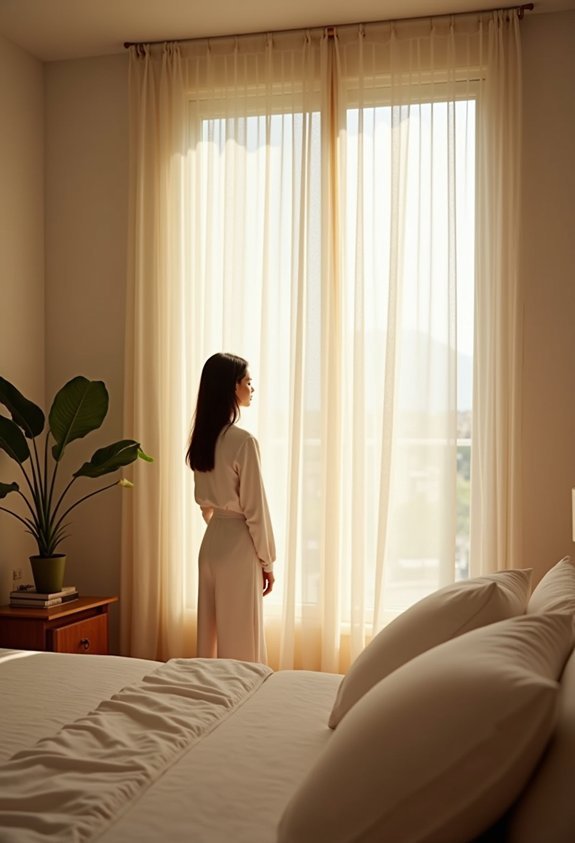
Identity gets strangely quiet when your stuff disappears, and that quiet forces an honest audit of who you’re without your collections and costumes.
Without default labels from clothes, gadgets, or décor, you notice which preferences remain. You see that you still love certain ideas, work, and people, even when no object points to them.
That’s identity exploration in practice: testing who you’re when no one can “read” you by your things.
You start asking practical questions: How do I spend my time now? What values actually guide choices?
As answers surface, you design small habits—learning, moving, creating, serving—that don’t require storage space.
This builds personal growth you can carry anywhere, because it lives in actions, not inventory, stories, or status or praise.
Handling the Fear of Regret When You Declutter
Regret anxiety often shows up before you even touch a drawer, whispering that you’ll miss something the moment it’s gone.
To practice fear management, slow the decision down. Hold the item, name its purpose, and ask, “When did I last use this, and when will I realistically use it again?” If you can’t answer, that’s data, not drama.
Slow decisions down; if you can’t justify keeping it, that’s information, not catastrophe
For regret minimization, create safety nets. Take photos of sentimental things. Box questionable items, label the box with a date, and store it out of sight. If you don’t open it by then, you’ve tested life without those objects.
You’re not committing to perfection, only to learning. Each small, low‑risk choice builds evidence that your needs don’t depend on clutter. That proof calms regret early on.
You may also like:


The Unexpected Everyday Benefits of Owning Less

How often do you notice how much your stuff quietly manages you—your time, energy, and mood—rather than the other way around?
When you own less, daily life becomes simpler to run. You spend less time cleaning, hunting for things, or reorganizing overflowing spaces. Surfaces stay clearer, so you can reset rooms in minutes, not hours.
Decisions get easier too: fewer clothes, dishes, and gadgets mean fewer choices and less decision fatigue. Money stretches further because mindful consumption replaces impulse buying; you buy what you truly use.
A minimalist lifestyle also reduces background stress: fewer visual distractions, fewer broken items waiting for attention, fewer nagging “shoulds.” You gain pockets of free time, steadier focus, and more mental bandwidth for what actually matters in your day.
Why I’m More Myself With Fewer Things
As the practical benefits of owning less start to show up in your calendar and your living room, something more personal shifts too: you begin to see who you’re without all the extra layers of stuff.
With fewer distractions, your preferences surface. You notice what you actually use, enjoy, and value. This becomes a self discovery journey grounded in daily choices, not abstract ideals.
You stop dressing, decorating, and spending to impress others, and start asking, “Does this fit my life today?” That question builds alignment. Your routines match your priorities; your space reflects your real identity.
As clutter disappears, excuses fade too. You’ve got time and energy to pursue personal growth, deepen relationships, and practice the habits that make you feel authentic.
Conclusion
Like Odysseus finally sailing past the sirens, you realize the call of your stuff was just noise. When you choose less, you reclaim your time, energy, and attention. You keep the memories, lose the excess, and create space for who you’re becoming. Start small: one drawer, one shelf, one “someday” item. As you let go, you’ll see it clearly—your life was never in your things. It’s in what you do with the space you’ve freed.