Why Minimalism Looks Different for Everyone
When you choose minimalism, you’re not signing up for a single, rigid look—you’re deciding what “enough” means for you in a world that keeps asking for more. Your culture, upbringing, personality, and current season of life all pull that definition in different directions. That’s why one person’s empty white room is another’s nightmare. The real work isn’t copying someone else’s version of less, but uncovering why you want less in the first place…
Defining “Enough” in a World of “More
How do you know when you finally have enough? You start by noticing the quiet line between want and need. Instead of asking, “Can I get this?” you ask, “Does this serve my life?”
You look at your personal values—peace, creativity, connection, purpose—and let them set the limits. Enough becomes what supports those priorities, not what impresses others.
You’ll feel societal pressures pushing you toward upgrades, trends, and comparison. When that noise grows loud, you return to evidence: Do you use it? Does it simplify or complicate your days?
Do you feel lighter or heavier after bringing it in? Defining enough isn’t a single decision; it’s a habit of honest checking-in, so your life fills with what truly matters for you, not for others.
How Culture and Upbringing Shape Our Idea of Less
Even before you choose what to keep or let go, your culture and upbringing have already been whispering rules about “enough.”
Maybe you grew up in a home where saving everything was a sign of security, or in a family that celebrated new purchases as proof of success. These cultural influences, upbringing values, and societal norms quietly script what feels normal.
- Maybe you saw relatives display every gift to honor family traditions, so you equate love with visible abundance.
- Maybe moving often taught you to travel light, so clutter now feels like a trap.
- Maybe your community prized hospitality, so you still overbuy “just in case” guests arrive.
When you question these stories, you don’t reject your roots; you choose beliefs that support you.
Minimalism for Different Life Stages and Family Setups
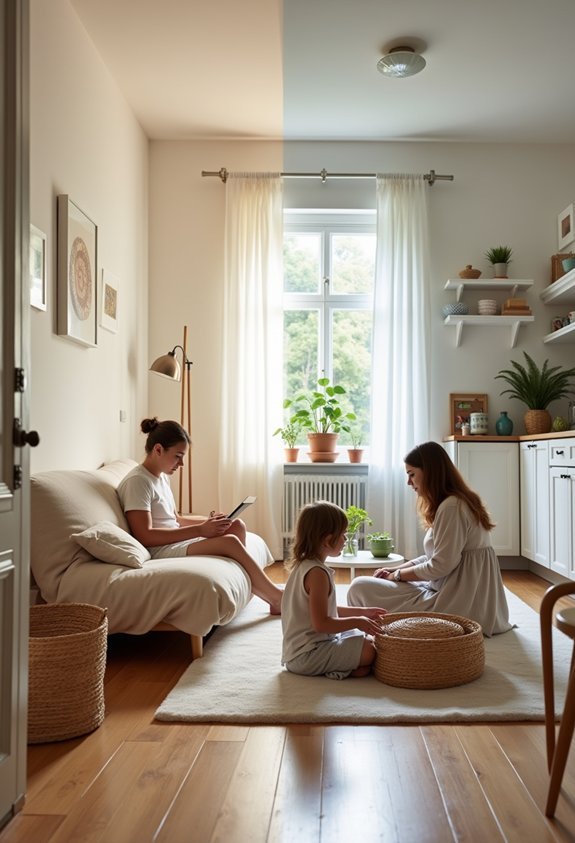
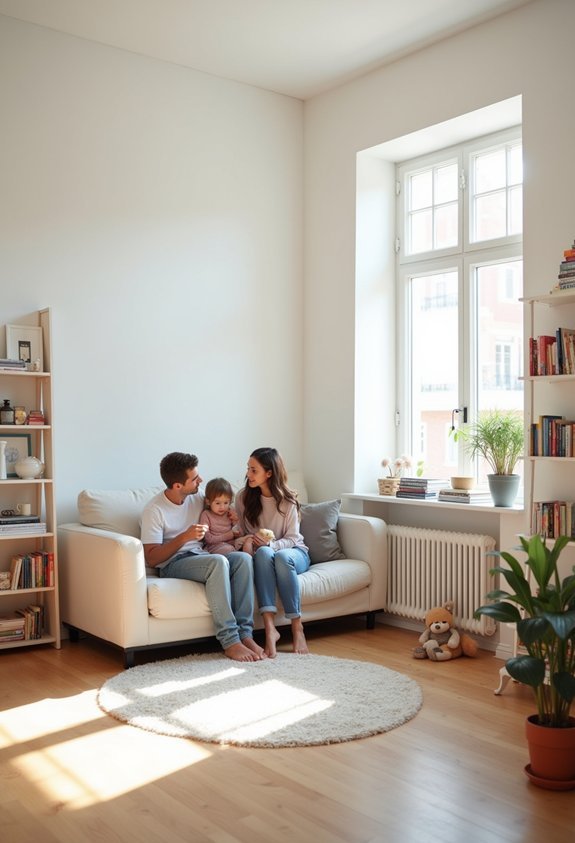
As your life shifts—from roommates to partners, from newborns to teens, from solo seasons to caring for aging parents—minimalism shifts with it.
You’re not aiming for one perfect setup; you’re learning to right-size your stuff to your current reality. In early adulthood, small spaces, tight budgets, and emerging career demands push you to ask what you actually use.
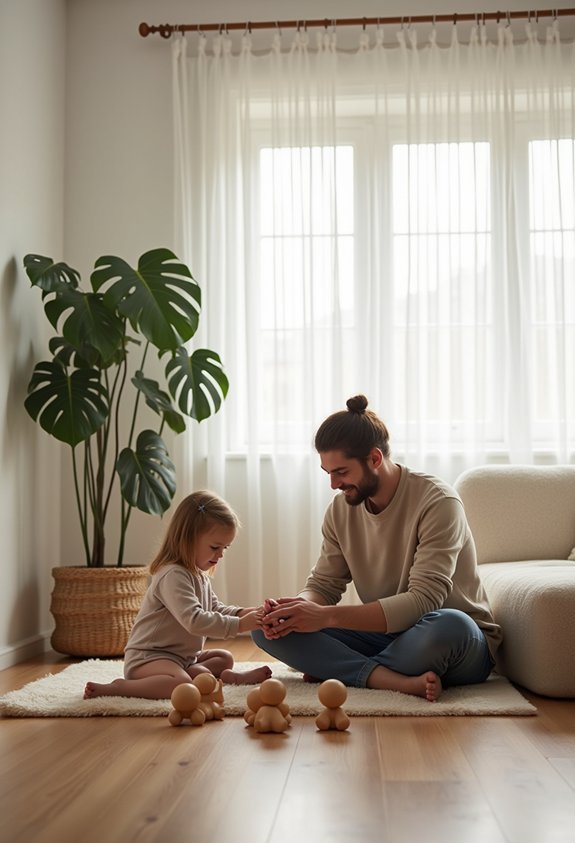
Later, evolving family dynamics and parenting styles challenge you to limit clutter while leaving room for play and creativity. As relationship goals deepen, you might prioritize shared experiences over endless home upgrades.
Major life transitions—moves, illnesses, separations, retirements—invite you to re-evaluate personal priorities, lifestyle choices, and what supports financial stability.
Minimalism becomes a flexible framework, not rigid rules. You keep adjusting so your spaces keep supporting.
Personality Types and the Many Aesthetics of Minimalism
While the word “minimalism” might make you picture bare white walls and a single chair, the reality is much more personal and varied. Your personality traits, aesthetic preferences, and 生活方式 shape how “less” looks for you.
Instead of chasing a trend, you can design a calm, functional space that respects your emotional needs.
Consider how different minimalist aesthetics might fit:
- You keep cozy textures, warm colors, and a few sentimental objects, edited but visible.
- You prefer clean lines, hidden storage, and strict limits, enjoying clear surfaces and sharp order.
- You mix plants, handmade items, and neutral basics, curating a soft, organic feel.
Notice what energizes you, what relaxes you, and what quietly irritates you. Let those signals guide what stays in your home today.
You may also like:
Digital, Mental, and Emotional Clutter: Beyond Physical Stuff

Your rooms and objects set the tone for your days, but they’re only part of the story; the tabs in your browser, the thoughts looping in your mind, and the emotions you avoid or stockpile can feel just as crowded as an overstuffed closet.
You practice clutter management here by noticing what constantly grabs your attention. A simple digital detox—unsubscribing, deleting, muting—creates mental space for what truly matters.
You might close open loops by writing lingering worries on paper, then deciding one next step or consciously letting them go. Emotional wellbeing also grows when you pause to name what you feel instead of scrolling past it.
As you streamline inputs, you don’t shrink your life; you uncover it, with calmer focus, presence, and choice.
Crafting a Minimalism That Supports Your Real Life
Instead of forcing yourself into someone else’s version of a “perfectly minimal” life, you experiment to see what actually supports the days you want to live.
You begin with your personal values: what matters, what restores you, what you’re willing to release. Then you translate those insights into practical applications that fit your season of life, not an aesthetic trend.
- You keep tools that help you create, and let go of gadgets that only entertain.
- You design a calm morning corner instead of an entire magazine-ready living room.
- You schedule fewer weeknight commitments so you can sleep, cook, and connect.
You revise often. When life changes, your minimalism shifts too, always aiming to remove friction and expand breathing room.
That’s how it becomes truly yours.
Conclusion
Ironically, you don’t become a minimalist by copying anyone else’s version of “less.” You get there by noticing what you keep chasing, then realizing it never quite delivers the “more” it promised. So you edit a drawer, a calendar, a belief. You stop performing and start choosing. Your minimalism might look messy, colorful, or unconventional—and that’s the point. You’re not curating an aesthetic; you’re creating a life that finally feels like enough for you, every day.