Why Sentimental Items Are the Last Thing to Tackle
You save sentimental stuff for last because it’s not just clutter—it’s your heart in object form. That sweatshirt from college, grandma’s mug, the box of notes from an ex…they’re memory launch buttons, and letting them go can feel like erasing your own story. Starting with easier things (like random cables and 47 free tote bags) builds confidence, so when you finally face the emotional box, you’ll have tools, courage, and a plan waiting.
What you will leave with
- Sentimental items are loaded with memories and identity, making their emotional “weight” much heavier than ordinary clutter.
- Strong memory triggers and sensory associations make it hard to separate the object from the person or moment it represents.
- Ownership bias and guilt about discarding gifts or inherited items inflate their perceived value and complicate decisions.
- Starting with easier, non-sentimental categories builds decision-making skills and confidence before facing emotionally charged belongings.
- Delaying sentimental decluttering allows time for reflection, emotional processing, and clearer choices about which memories still support your present self.
Understanding the Emotional Weight of Sentimental Belongings
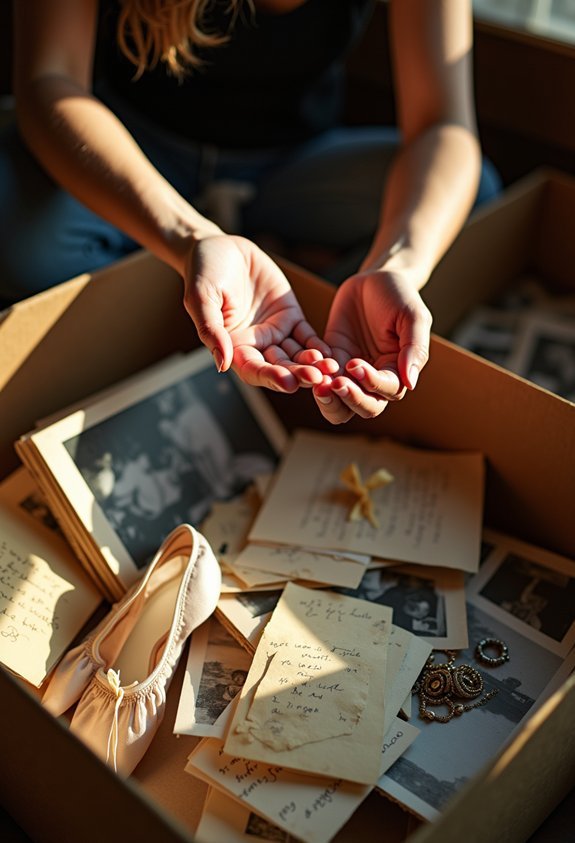
Even though it’s “just stuff,” sentimental things can feel weirdly heavy, like you’re lifting a box filled with bricks, memories, and maybe three old birthday cards from your ex.
Sentimental clutter isn’t just stuff; it’s a box of bricks, memories, and three questionable birthday cards
You’re not weak or “too sensitive” for feeling that weight, you’re just human, and your brain links objects with emotional attachment and strong sensory experiences—how something looked, sounded, or even smelled during big moments.
You don’t only remember the item, you remember its feel—the scratchy sweater, the smooth concert ticket, the heavy photo album that thumps your lap.
So when you think about letting something go, it’s not just trash day, it’s “Will I lose this memory?”
Here’s the good part—you can keep the memory, even without keeping every single object.
This is where memory preservation techniques—like journaling, voice memos, or taking photos—let you honor what matters without having to hold on to every physical item.
How Memory and Identity Get Wrapped Up in Objects
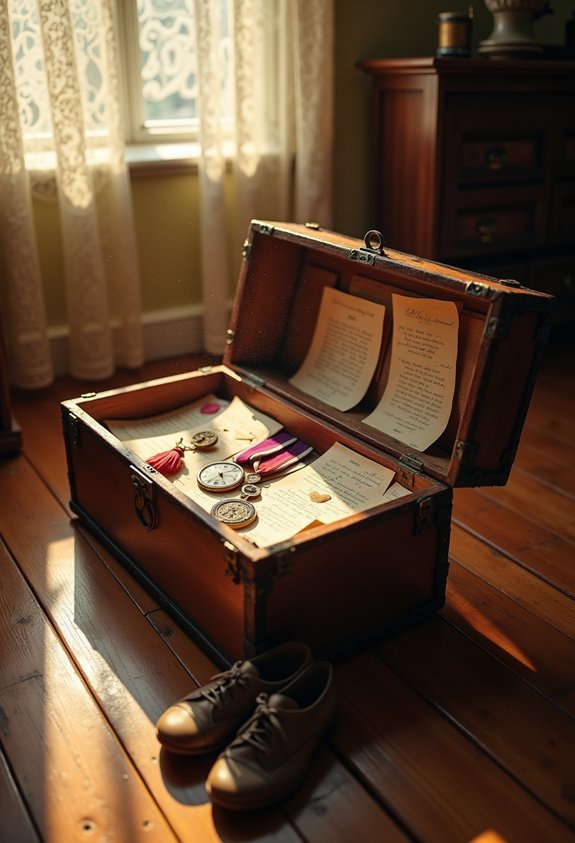
Although it might look like you’re just staring at “stuff,” what you’re really seeing is a map of who you are.
Your brain actually lights up more when you see your own things, so objects become quiet identity reflections—little “this is me” flags scattered around your home.
They also work as powerful memory triggers, pulling up whole scenes when you just touch a ticket stub or smell an old hoodie, giving you a fast trip back in time—no time machine, just dust. This is why releasing certain belongings can gently shift your sense of safety at home, turning a space that feels heavy or stressful into one that actively supports your well-being.
- Your childhood stuffed animal
- A worn sweatshirt from college
- Your first apartment’s key
- A chipped mug from a past relationship
- A note in your mom’s handwriting
Each one holds a story, and in hard seasons, those stories remind you you’re still you.
The Hidden Psychological Roadblocks to Letting Go
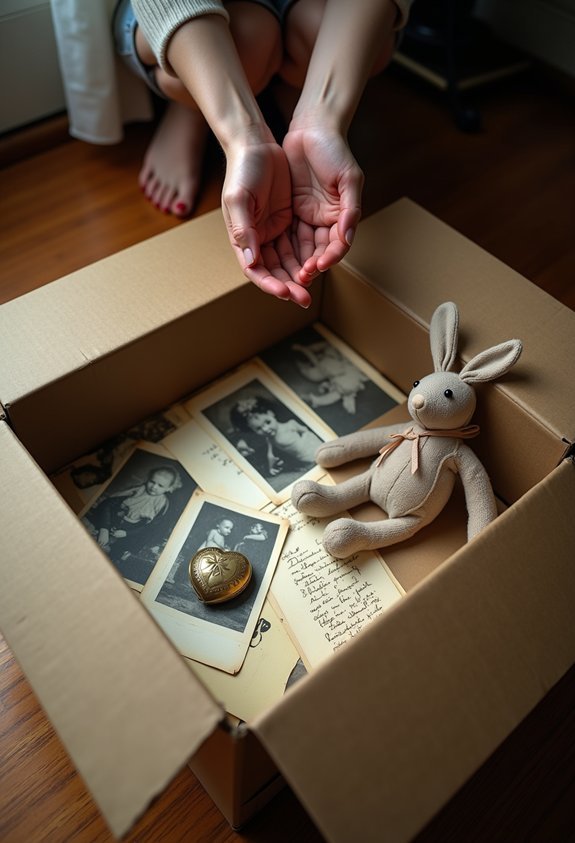
Some days it feels like letting go of stuff should be simple—toss it, donate it, move on—but then you pick up one old birthday card and suddenly you’re crying in a pile of gift bags, wondering how a piece of folded paper now owns your soul.
Those memory triggers are powerful, pulling up whole scenes—voices, smells, feelings—so your brain screams, “If I lose this, I lose *that*.”
Add ownership bias (your personal version of the Endowment Effect), and suddenly every faded T‑shirt feels priceless, even if you’d never buy it today.
Then comes guilt—grandma’s dishes, your dad’s tools, your kid’s every drawing—so it’s not just clutter, it’s “I’m a terrible person if this goes.”
That’s because your brain treats sentimental clutter as a form of emotional safety, so losing the item can feel like losing love, identity, or protection itself.
Why Starting Elsewhere Makes Decluttering More Successful
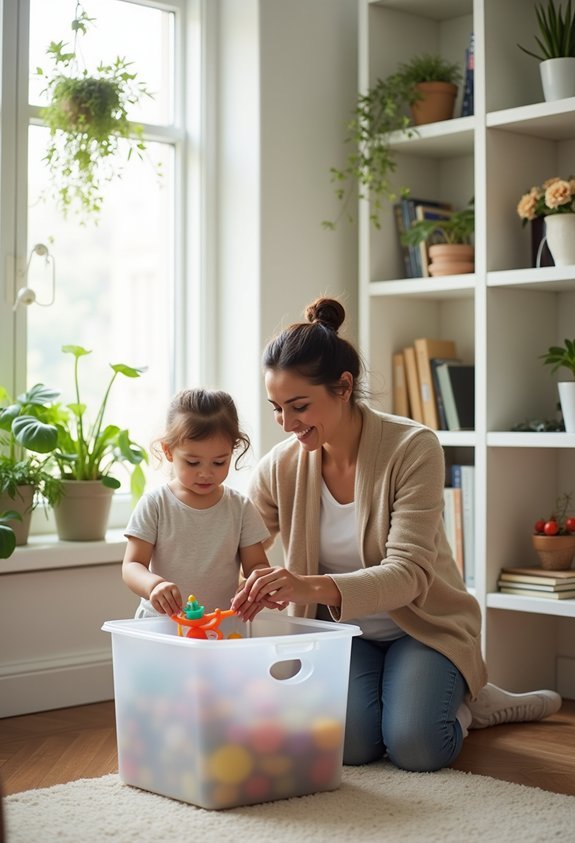
When you begin with non sentimental decluttering, your brain gets a warm‑up lap, not a smackdown.
You build skills, small wins, and emotional clarity first, so the “heart items” don’t steamroll you later.
- Clear a junk drawer before a memory box
- Practice “keep/toss” on old cables
- Notice what you actually use daily
- Create space for what truly matters
- Let calmer rooms steady your feelings
This gentle approach mirrors how tackling one small zone at a time builds confidence and turns decluttering into a sustainable habit.
Practical Strategies for Preserving Memories Without the Mess
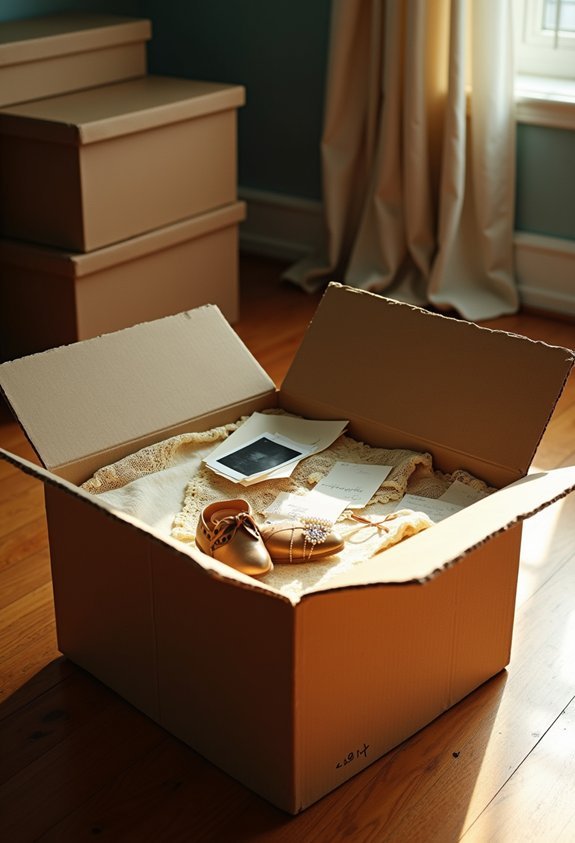
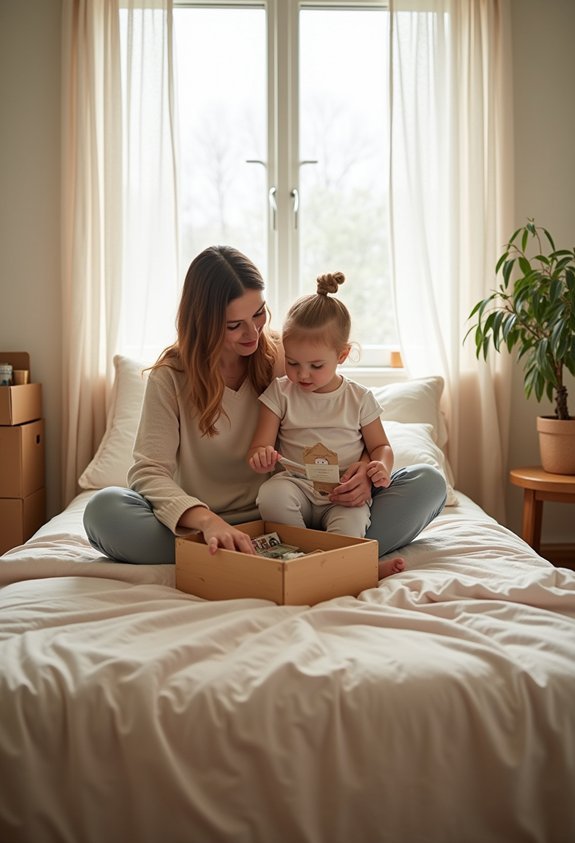
Even if your home feels like a museum of “stuff I can’t get rid of,” you don’t have to choose between your memories and your sanity. Start by sorting what truly tugs your heart—wedding letters, grandma’s recipes, kids’ art—then keep only a “best of” pile, not the whole mountain. Use photos, scans, and short videos to save the rest, turning boxes into digital storytelling moments you can actually find later—no more digging through mystery tubs labeled “misc, 2009?” Try memory mapping: sketch a simple timeline or life map, then place key items—and their stories—on it, snapping pictures and recording quick voice notes so the meaning stays, even if the object eventually doesn’t. As you sort, notice how each sentimental item pulls on your energy, and let that guide you toward keeping only what supports your mental clarity, not what silently weighs you down.
The Long-Term Benefits of Waiting on Sentimental Decluttering
Although it might feel like you’re “failing at decluttering” by putting the hard stuff off, waiting on sentimental items is actually a smart, long‑game move.
You’re not procrastinating—you’re practicing delayed decision making so your heart can catch up with your head.
As time passes, the emotional sting softens, you feel less flooded, and choices get kinder and clearer. You’re building emotional resilience, not just “being strong,” but learning you can face big feelings without falling apart. Giving yourself time also lowers the cognitive and emotional load that each object places on your nervous system, so you’re not making decisions from a state of overload.
- You avoid tear‑streaked, trash‑bag decisions you’ll regret tomorrow.
- Your brain clears as easier areas get tidy first.
- Guilt and “what if I need this” drama quiet down.
- Reflection time shows which memories still support who you’re becoming.
- You return later calmer, braver—ready to choose on purpose.
Creating a Curated, Meaningful Collection That Supports Your Life
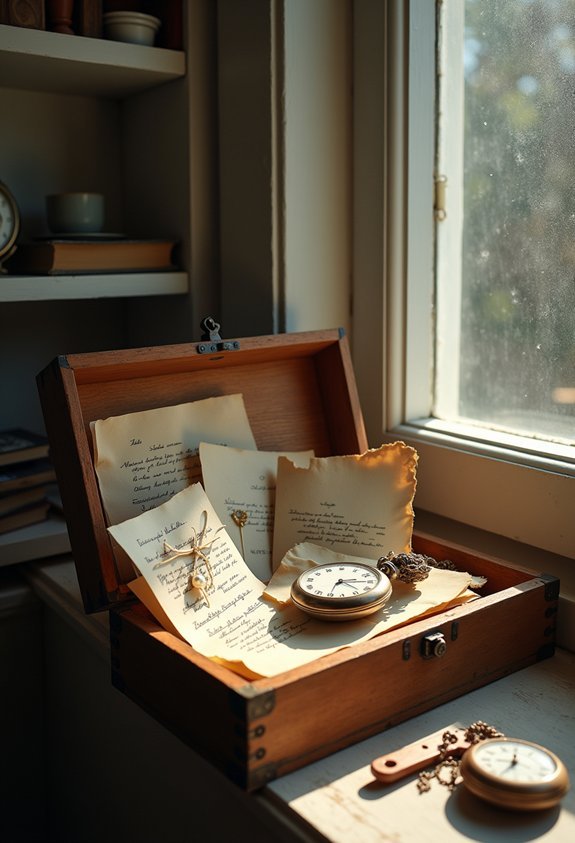
So here’s the real goal with sentimental stuff—it’s not to keep everything, it’s to keep the right things.
You’re building a small “greatest hits” album of your life, not a storage unit of guilt and dust.
Use simple curation techniques: ask, “Does this still have strong emotional resonance for who I’m right now?”
If it just makes you feel heavy, confused, or like a bad relative—hard pass, no matter how pricey it was.
Give the best pieces real homes—shadow boxes, a labeled photo box, a digital album, even a “story shelf.”
You may also like:


Let the rest go kindly by gifting, donating, or snapping photos, so your collection supports your life today, not a museum of every version of you ever.
Think of your sentimental belongings as a personal archive, keeping a few meaningful pieces that honor your past while still leaving room for the life you’re living now.
In case you were wondering
How Do I Talk to Family Members Who Disagree About Decluttering Sentimental Items?
You start with respectful dialogue, listen first, then calmly share your needs. Validate their memories, set clear emotional boundaries, and propose compromises like photos, memory boxes, or shared “keep/let go” decisions, moving slowly to maintain trust.
What if I Regret Letting Go of Something Deeply Sentimental Years Later?
Two-thirds feel guilt after discarding sentimental items, so regret’s normal. You practice regret management by honoring the lesson, creating new rituals, and using photos or written stories for memory preservation instead of chasing the exact object you released.
How Can I Fairly Divide Sentimental Heirlooms Among Siblings Without Conflict?
You fairly divide sentimental heirlooms by starting honest sibling communication, listing items and meanings, then using heirloom sharing methods—rotating picks, point systems, or lotteries—while documenting agreements, inviting mediation, and separating emotional talks from money discussions.
Are There Cultural or Religious Reasons I Should Consider Before Discarding Certain Items?
You absolutely should—some items carry cultural significance and express religious beliefs so deep they’re like a thousand-year-old heartbeat. Before discarding, ask relatives, check rituals or taboos, and consider repurposing, donating, or respectfully returning them.
How Do I Handle Sentimental Clutter When Preparing for a Major Move or Downsizing?
You handle sentimental clutter by starting early, tackling easier items first, and using memory preservation strategies like photos or scans. Acknowledge emotional attachment challenges, set space limits, keep only favorites, and donate or gift the rest mindfully.
Conclusion
You don’t have to be a decluttering superhero—you just have to start where it’s easiest, not where it hurts.
So box the love letters for later, sort the socks today, smile at old photos tomorrow, and slowly build courage—item by item, shelf by shelf, memory by memory—until you’re ready to keep the few things that truly matter, let the rest go, and finally have a home that holds your life, not just your stuff.