Why I Quit Social Media Scrolling Before Bed
You’re stuck in the “just five more minutes” trap—scrolling before bed while your brain thinks it’s daytime, melatonin production tanks, and stress hormones spike from comparing yourself to everyone’s highlight reel. Blue light tricks your body into staying alert, social media drama feels like real threats (hello, cortisol), and suddenly it’s 2 AM. When you quit, eye strain vanishes, mental fog lifts, and mornings actually feel manageable—plus you’ll discover simple wind-down routines that help your brain relax without the glow.
Key Takeaways
- Blue light from screens suppresses melatonin production, tricking the brain into staying awake and disrupting natural sleep cycles.
- Social media content triggers stress and anxiety, elevating cortisol levels and creating racing thoughts that interfere with falling asleep.
- Addictive platform design traps users in endless scrolling, stealing hours of sleep and reducing next-day productivity.
- Quitting bedtime scrolling reduces eye strain, improves mental clarity, and leads to deeper, more restorative sleep quality.
- Replacing screens with calming routines like reading or journaling helps the brain naturally transition into sleep mode.
The Science Behind Blue Light and Sleep Disruption
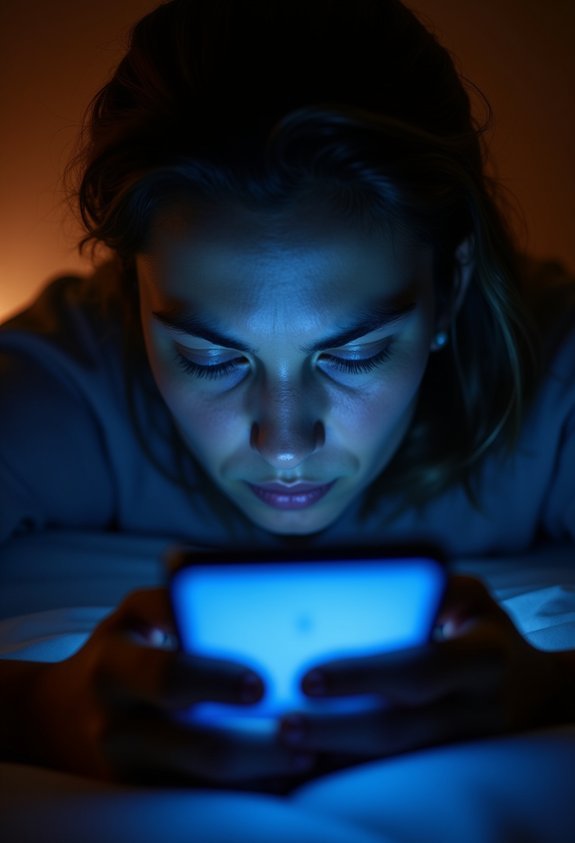
When you’re scrolling through Instagram at 11 PM, your phone isn’t just showing you content—it’s basically beaming tiny blue light lasers straight into your eyeballs.
Sounds dramatic, but it’s true.
Blue light tricks your brain into thinking it’s daytime, which messes with your body’s internal clock (the thing that tells you when to sleep). Your brain stops producing melatonin—the sleepy-time hormone—and suddenly you’re wide awake at midnight, wondering why you can’t fall asleep.
Here’s the kicker: even after you finally put your phone down, your sleep cycles stay disrupted for hours.
Your body needs darkness to know it’s bedtime. But when you’re doom-scrolling through TikTok, you’re essentially telling your brain, “Hey, stay alert! There’s stuff happening!”
Not exactly a lullaby.
The constant stream of information from your screen also creates cognitive overload, making it even harder for your brain to wind down and transition into rest mode.
How Social Media Triggers Stress and Anxiety at Night
But blue light is only half the problem—the content you’re actually consuming can mess you up even worse.
Think about it: you’re scrolling through posts about world crises, comparing your messy bedroom to someone’s perfect vacation, or reading heated arguments in the comments. These are major stress triggers for your brain.
Your body can’t tell the difference between real danger and social media drama—it just knows something feels threatening, so it pumps out cortisol and adrenaline.
Your stressed-out brain treats a Twitter argument the same way it treats a bear attack—with pure survival mode panic.
Not exactly the vibe you need for sleep.
The anxiety effects stick around, too. You’re lying there replaying that controversial post, worrying about that passive-aggressive comment, mentally composing the perfect comeback you’ll never actually send.
Your brain’s racing when it should be winding down.
This overloaded nervous system is exactly what blocks your brain from the calm state it needs to prioritize rest over continued mental stimulation.
The Time-Sucking Trap of “Just Five More Minutes”
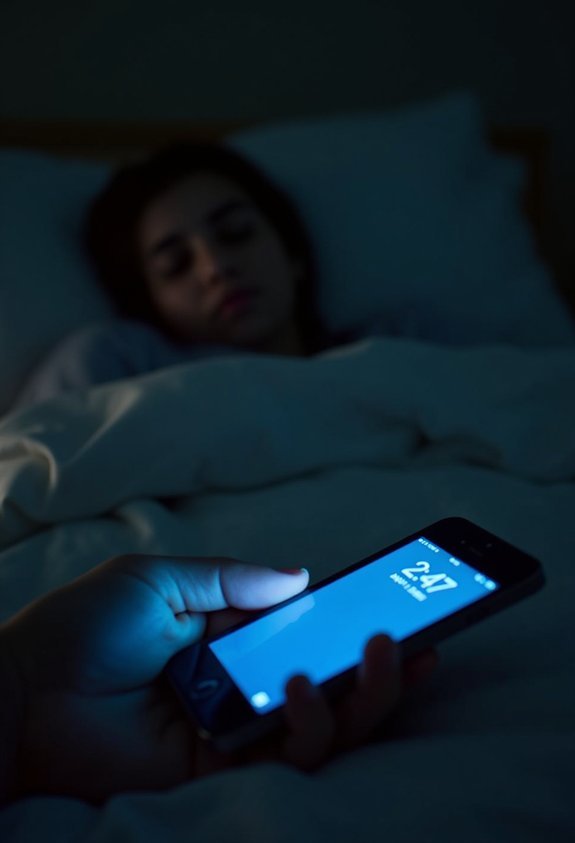
You’ve been there—crawling into bed at a reasonable hour, telling yourself you’ll just check Instagram real quick before lights out.
Then suddenly it’s 1 AM and you’ve watched seventeen cat videos, scrolled through your ex’s vacation photos, and somehow ended up on a thread about whether hot dogs are sandwiches.
So much for time management.
Here’s the thing: social media is literally designed to keep you hooked. Every refresh, every notification—it’s all engineered to trigger that “just five more minutes” response in your brain.
And those minutes? They add up fast.
This isn’t about willpower (you’re not weak, I promise). It’s about recognizing that bedtime scrolling sabotages your productivity hacks before the next day even starts.
The endless scroll feature mimics the same browsing behavior retailers use to keep you shopping longer—except instead of your wallet, it’s draining your sleep.
Your morning self deserves better than a sleep-deprived zombie.
Physical Symptoms I Noticed After Quitting
Within three days of ditching my bedtime scroll habit, my eyes stopped feeling like someone had rubbed sandpaper across them every morning. Wild, right?
The physical changes hit fast—way faster than I expected. Here’s what shifted:
- Eye strain vanished (no more burning sensations or constant squinting)
- Physical fatigue decreased dramatically by day five
- Mental clarity improved, especially during morning hours
My sleep quality went from “zombie dragging through life” to actually feeling rested. You know that groggy, can’t-think-straight feeling that follows you around all day? Gone.
The connection between screens and physical exhaustion is real, and your body knows it. Mine was basically screaming at me—I just wasn’t listening until I gave it a break.
Just like clutter triggers nervous system responses throughout the day, the constant stimulation from scrolling was keeping my body in a state of low-grade stress even when I thought I was winding down.
Mental Health Improvements in the First Few Weeks
After the physical stuff settled down, something even weirder happened—my brain started working like it used to before I got hooked on the scroll.
I could actually focus on conversations without mentally checking out halfway through. Wild, right?
The anxiety that usually hit around 9 PM—you know, that fun “everything’s falling apart” feeling—started fading after week two of my digital detox.
Instead of doomscrolling through bad news and comparison traps, I accidentally stumbled into mindfulness practices (fancy term for just… existing without a screen glued to my face).
My thoughts got clearer. Less jumpy.
I wasn’t constantly replaying everyone else’s highlight reel in my head, which meant I could finally appreciate my own life.
I started noticing small moments—like the steam rising from my tea or the quiet hum of the house—without needing them to be Instagram-worthy or productive.
Turns out, your mental health improves when you’re not mainlining chaos before sleep.
Who knew?
Alternative Evening Routines That Actually Help Me Unwind
So once I ditched the phone, I’d this annoying problem: a bunch of empty time and zero clue what to do with it.
Turns out, you’ve got options that actually work.
Here’s what saved me:
- Mindful journaling — just three things I’m grateful for, nothing fancy
- Reading actual books — preferably ones that don’t make my brain work overtime
- Sipping calming teas — chamomile became my new best friend
The trick? Pick one thing and stick with it for a week.
Don’t go crazy trying everything at once (been there, failed spectacularly).
I started with the tea thing because—let’s be honest—it required almost zero effort.
You may also like:




Then I added five minutes of journaling.
Small steps, friend. That’s the secret.
A predictable wind-down routine actually signals your brain to power down, which is why these simple rituals work better than scrolling ever did.
In case you were wondering
What Specific Time Should I Stop Using My Phone Before Bed?
You should stop using your phone at least 30-60 minutes before bed. This’ll help reduce screen time’s impact on your sleep quality. Making this change part of your bedtime routine can significantly improve how well you rest tonight.
How Do I Resist the Urge When My Phone Is Nearby?
Your phone’s a magnet pulling you in. Break the spell with smart phone placement—keep it across the room or in another space. Fill that void with bedtime alternatives like reading, journaling, or meditation instead.
What Should I Tell Friends Who Message Me Late at Night?
You should set clear late night boundaries by telling friends you’re not available after a specific time. Explain you’ve stopped checking messages before bed, and adjust their friend expectations so they’ll contact you earlier instead.
Did Quitting Social Media Scrolling Affect Your Morning Routine Too?
Yes, it transformed mornings completely. You’ll notice improved productivity immediately when you’re not checking notifications first thing. Your morning focus becomes sharper, and you’ll actually accomplish tasks instead of losing time to endless scrolling.
How Long Did Withdrawal Symptoms Last After You Quit?
You’ll experience withdrawal symptoms for about three to five days. The urge to scroll peaks during nights two and three, but you’ll notice improved mental clarity by day four. It’s uncomfortable but totally manageable and worth pushing through.
Conclusion
You’ve got this—and honestly, your brain’s gonna thank you for it. Think of bedtime scrolling like eating candy right before brushing your teeth (why would you do that to yourself?). Your sleep deserves better than doom-scrolling at midnight. Start small tonight—just one night without your phone in bed. Notice how you feel tomorrow morning. That’s your future calling, and it’s well-rested.