17 Simple Living Habits for Introverts
Living simply as an introvert means protecting your energy like it’s your most valuable currency—because honestly, it is. Start by creating morning routines that give you quiet time before the world makes demands, declutter both your physical space and digital inbox to reduce mental noise, and curate your social calendar so you’re not constantly drained by obligations that don’t recharge you. Design a cozy sanctuary where you can retreat without explanation, track what actually depletes your energy, and remember that saying no is self-care, not selfishness—and there’s so much more to unpack about building a life that actually works with your introverted nature instead of against it.
Key Takeaways
- Start mornings with 15 minutes of solitude for stretching, journaling, or quiet reflection to reduce cortisol and preserve energy.
- Declutter physical and digital spaces using a one-in-one-out rule to minimize decision fatigue and mental noise.
- Schedule one social day weekly for gatherings and keep two weeknights free for recharging to manage energy effectively.
- Create a private sanctuary with controlled lighting, sensory elements, and noise-canceling tools to support emotional regulation and focus.
- Track energy levels before and after activities to identify draining commitments and prioritize solo hobbies that encourage mindful immersion.
Create a Morning Routine That Protects Your Energy Before the World Demands It

Before you check your phone or talk to anyone—even yourself—you need a buffer zone between sleep and the chaos.
Think of it as building a force field, but with tea and silence instead of superpowers.
Your mindful awakening doesn’t require meditation apps or complicated rituals.
Just fifteen minutes of *you* time—stretching, journaling three thoughts, sipping coffee while staring at nothing (yes, that counts).
These energy rituals become your secret weapon against overstimulation.
They’re like emotional breakfast: skip them, and you’ll crash by noon when Karen from accounting wants to “brainstorm ideas.”
The goal? Fill your cup before everyone else demands a pour.
These intentional pauses not only reduce cortisol levels but also sharpen your focus for the entire day ahead.
Start small—maybe just five quiet minutes tomorrow morning.
You’ll feel the difference immediately.
Establish a One-In-One-Out Rule to Prevent Physical and Mental Clutter
Every time something new enters your space, something old needs to leave—otherwise you’re just running a museum for stuff you don’t actually like.
One in, one out—or you’re just curating a collection of things you’ve outgrown.
This one-in-one-out rule keeps your home from becoming overwhelming. Buy a new shirt? Donate an old one you haven’t worn in months.
It’s basically clutter free living on autopilot.
For introverts especially, physical mess creates mental noise—and you need that mental bandwidth for recharging, not for managing piles of random things.
The minimalist mindset isn’t about deprivation (you’re not a monk). It’s about making space for what actually matters.
Think of it this way: every item you own requires a tiny bit of your attention, even subconsciously.
Less stuff means more peace.
When you prevent accumulation, you avoid the decision fatigue that comes from managing too many possessions.
And honestly? Future-you will thank present-you for not hoarding seventeen throw pillows.
Schedule Regular Digital Detox Periods to Escape Constant Connectivity

Your phone isn’t your enemy—but treating it like a needy best friend who texts at 2 a.m. probably isn’t helping your peace of mind either.
Digital wellness strategies start with simple boundaries.
Try these mindful tech usage approaches:
- Designate phone-free zones (your bedroom counts—yes, really)
- Set specific “offline hours” like Sunday mornings or weekday evenings
- Delete apps that drain you instead of energize you
- Use airplane mode during focused activities like reading or creative work
You don’t need a week-long monastery retreat to recharge.
Even two hours of unplugged time helps your introvert brain decompress from constant notifications, group chats, and that overwhelming feeling of always being “on.”
Start small—maybe just during dinner—and notice how much lighter you feel.
Constant connectivity keeps your nervous system in threat mode, making it harder to truly rest even when you’re physically still.
Curate Your Social Circle Down to People Who Actually Recharge You
Not all friendships are created equal—and pretending otherwise is exactly why you feel exhausted after hanging out with certain people.
Some folks drain your social energy like a phone battery on 1%, while others actually *add* to your reserves. Wild concept, right?
Here’s your permission slip: you don’t owe anyone your presence just because they’re “nice enough.”
If someone leaves you feeling depleted (even though nothing technically went wrong), that’s valuable information.
Focus on meaningful connections with people who get your need for quiet, who don’t guilt-trip you for declining invitations, who understand that sometimes you just… can’t.
Quality over quantity isn’t just a cliché—it’s survival mode for introverts.
Your energy is precious. Spend it wisely.
Research shows that consistent unavailability in relationships often signals shifting priorities rather than genuine scheduling conflicts, so pay attention when people repeatedly postpone plans with you.
Design a Cozy Personal Sanctuary That Requires Zero Explanation

As an introvert, having one specific spot that’s entirely *yours*—no justifications needed—isn’t selfish or antisocial.
It’s survival.
Your sanctuary should feel like a hug from your favorite blanket.
Think personal decor that makes *you* smile—not what looks good on Instagram.
Here’s what actually matters:
- Lighting you control — Harsh overhead lights are the enemy; get dimmers, salt lamps, or string lights
- Sensory elements that calm — soft textures, a candle you love, maybe a small fountain
- A door that closes — Physical boundaries matter, even if it’s just a corner with a curtain
- Zero obligation seating — A chair that doesn’t care if you read, nap, or stare into space
This space recharges you.
That’s the only explanation anyone needs.
Creating a peaceful environment minimizes distractions and helps your nervous system downshift after overstimulating days.
Practice the Art of Saying No Without Justifying Your Introversion
Someone’s going to ask you to do something you absolutely don’t want to do—probably later today, honestly—and you’ll feel that familiar panic rising.
Here’s the thing: “No, thank you” is a complete sentence.
You don’t owe anyone a dissertation about your energy levels, social battery, or why you’d rather eat glass than attend their party. Assertive communication means stating your boundary clearly—without apologizing for existing as an introvert.
Try this: “I can’t make it, but thanks for thinking of me.”
Done.
No explanations about recharging or needing alone time (even though those are valid self care practices). When you justify, people think they can negotiate. They can’t.
Your needs aren’t up for debate.
Practice saying no like you’re declining extra fries—casual, firm, and guilt-free. Research shows that setting clear emotional boundaries actually reduces stress and prevents burnout over time.
Adopt a Capsule Wardrobe to Eliminate Decision Fatigue
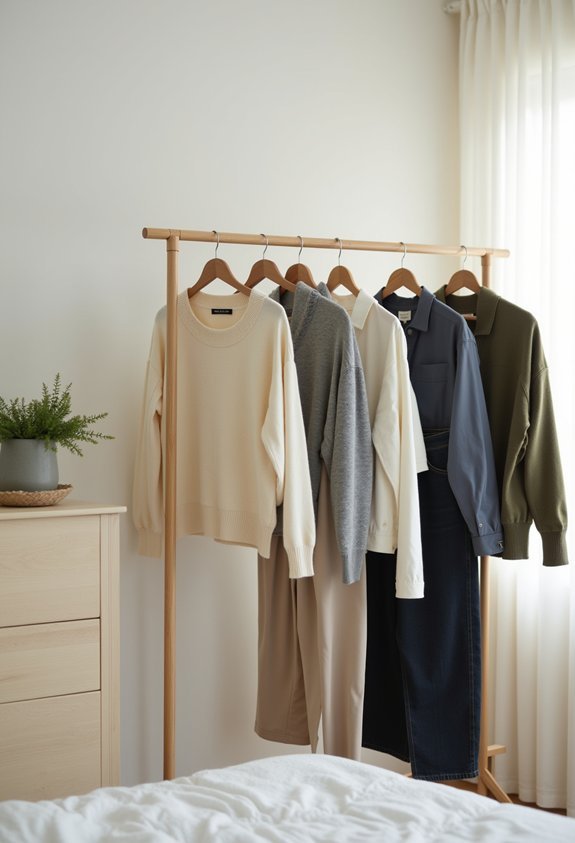
Your social boundaries are set—now let’s talk about the other exhausting decisions draining your limited energy reserves.
Creating a capsule wardrobe means fewer choices each morning—and that’s exactly what your introverted brain needs. Style simplicity isn’t about looking boring; it’s about protecting your mental energy for things that actually matter.
Here’s your starter plan:
- Choose 3-4 neutral colors that work together effortlessly (black, navy, gray—you can’t mess this up)
- Keep 25-35 total pieces including shoes and outerwear
- Buy wardrobe essentials you genuinely enjoy wearing (comfort counts, people)
- Donate anything you haven’t worn in six months without guilt
You’ll spend less time staring at your closet wondering why nothing “works,” and more energy on literally anything else. Every small decision draws on your limited mental resources, and automating your morning routine preserves willpower for the conversations and challenges that matter most to you.
Set Boundaries Around Your Alone Time Like It’s a Sacred Appointment
When someone texts “wanna hang out?” while you’re enjoying your precious Saturday solitude, that pit in your stomach isn’t social anxiety—it’s your brain screaming that you’ve already allocated this time for recharging.
Here’s the thing: you wouldn’t cancel a doctor’s appointment because someone wanted coffee, right?
Your sacred solitude deserves the same respect.
Block it in your calendar. Literally write “recharge time” on Sunday afternoons (or whenever works for you), and treat those hours like they’re untouchable.
When setting personal boundaries, be honest but gentle: “I’ve got plans this weekend”—because you do, with yourself.
Your friends will understand, and if they don’t? That’s their issue to work through, not yours.
You can’t pour from an empty cup.
Protecting these boundaries isn’t selfish—it’s necessary maintenance for an overloaded nervous system that needs regular downtime to function at its best.
Choose Hobbies That Allow for Solo Flow States Over Group Activities

There’s something magical about losing track of time while you’re deep into something you love—no forced small talk, no coordinating schedules, just you and whatever makes your brain light up.
Creative solo activities aren’t just hobbies—they’re your recharge station. When you’re sketching, writing, gardening, or coding, you enter mindful immersion practices that feel effortless (because nobody’s watching or judging).
You’re not being antisocial; you’re being smart about your energy.
Try these flow-friendly options:
- Reading or audiobook listening while doing puzzles
- Photography walks where you explore without commentary
- Cooking experimental recipes at your own pace
- Learning instruments with headphones on
Group book clubs? Exhausting. Solo reading marathons? Perfect.
Your hobbies should feel like permission to disappear into yourself—not another obligation requiring performance. These focused activities also reduce decision fatigue by eliminating the constant micro-choices that come with navigating social dynamics and group preferences.
Unsubscribe From the Endless Marketing Messages Demanding Your Attention
Just like those group activities that drain your battery, a cluttered inbox does the same thing—except it follows you everywhere, buzzing and beeping like a needy acquaintant who won’t take the hint.
Your inbox shouldn’t follow you around like an overeager friend who doesn’t understand boundaries or the meaning of personal space.
You deserve better than seventeen daily emails about flash sales you’ll never attend.
Start ruthlessly hitting “unsubscribe” on everything that doesn’t spark joy (or at least mild interest).
Set up email filters to automatically sort or delete the stragglers who ignore your unsubscribe requests—because some companies are like that one friend who keeps texting after you’ve said goodnight.
Take ten minutes to update your marketing preferences on websites you actually use. It’s surprisingly satisfying.
Your inbox should feel like your living room: peaceful, intentional, and absolutely not screaming at you about limited-time offers.
These constant marketing messages exploit behavioral science techniques like scarcity and urgency to trigger impulse decisions, so reclaiming your inbox is really about protecting your mental energy and decision-making capacity.
Meal Plan and Prep to Avoid Overstimulating Grocery Store Trips

Grocery stores weren’t designed with introverts in mind—they’re basically sensory assault courses disguised as places to buy cereal.
Between the fluorescent lights, crowded aisles, and that one person blocking the entire pasta section—it’s exhausting.
Here’s how meal prepping saves your sanity:
- Plan meals for the week so you know exactly what you need (no wandering aimlessly).
- Try grocery delivery services to skip the chaos entirely—your couch thanks you.
- Batch cook on Sundays when you’ve got energy, so weeknight you doesn’t have to.
- Keep a running shopping list on your phone to minimize store time.
Meal prepping means fewer trips, less decision fatigue, and more time doing literally anything else.
Your introverted self deserves that peace.
Create Evening Rituals That Wind Down Your Overstimulated Nervous System
By the time evening rolls around, your nervous system’s been through the wringer—work meetings, small talk, that one coworker who doesn’t understand personal space.
You need calming rituals that actually work.
Start with mindful breathing—just five minutes of deep inhales through your nose, slow exhales through your mouth. It tells your body, “Hey, we’re safe now.”
Five minutes of intentional breathing shifts your entire nervous system from fight-or-flight mode into genuine rest.
Dim those lights. Seriously, bright overhead lighting is your nervous system’s enemy after a long day of peopling.
Try a warm shower (bonus points for lavender soap), gentle stretching, or journaling about absolutely nothing important. The goal isn’t productivity—it’s unwinding.
Create a sequence you follow every night. Your brain loves predictability, and these calming rituals signal it’s finally time to power down.
No screens for the last hour. Yeah, we know. But it helps.
Limit Your Commitments to What Truly Matters to Your Values

When you’re constantly saying yes to everything, you’re actually saying no to your own well-being—and introverts feel this harder than anyone.
Value alignment isn’t some corporate buzzword—it’s your survival guide. Before accepting any commitment, ask yourself if it genuinely matches what matters to you. That book club invitation? Maybe skip it if forced socializing drains you for days.
Here’s your commitment clarity checklist:
- Does this energize or exhaust me? (Be brutally honest—your calendar will thank you.)
- Will I resent this next week? Future-you deserves protection from present-you’s people-pleasing.
- Can someone else do this equally well? You’re not the world’s only capable human.
- Does this align with my top three values? Everything else is negotiable.
Say no without guilt. Your energy is finite.
Embrace Slow Entertainment Like Reading Instead of Binge-Watching
Your brain wasn’t designed to process six hours of consecutive drama, yet somehow you’ve convinced yourself that finishing an entire season in one sitting counts as relaxation.
It doesn’t.
Reading, though? That’s actual rest for your introverted mind. You control the pace, pause whenever you want, and there’s no autoplay button hijacking your evening.
Start with simple reading rituals—ten pages before bed, a book on your nightstand instead of your phone. Let book recommendations come from friends (not algorithms designed to keep you scrolling).
The difference is real: binge-watching leaves you drained and guilty, while reading energizes you. Your mind processes stories differently when you’re actively engaged, not passively consuming.
Think slow food versus fast food—but for your brain.
Declutter Your Calendar by Batching Social Obligations Strategically
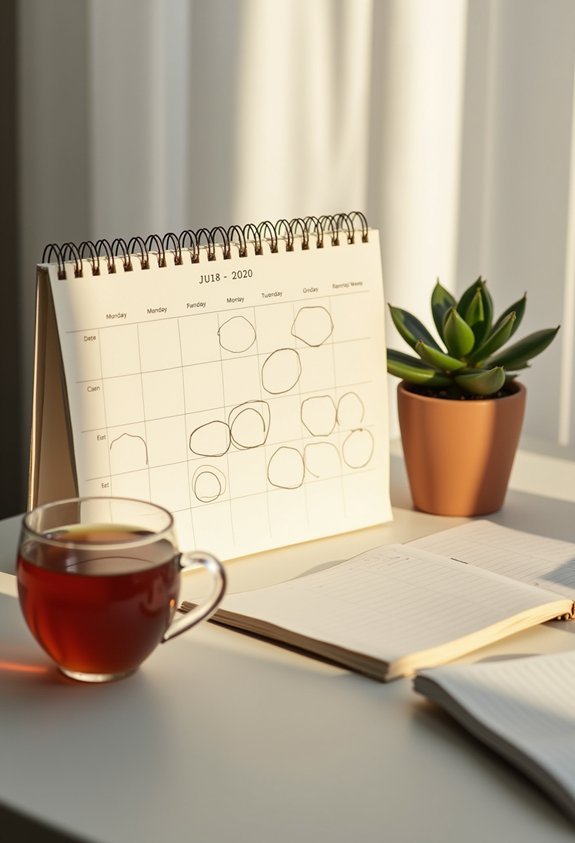
Just like your entertainment habits need boundaries, so does your social life—and no, that doesn’t make you a bad friend.
Here’s the thing: spreading social events throughout the week drains you faster than running a marathon in flip-flops. Instead, try these social obligation strategies and calendar decluttering techniques:
Scattering social events across your week is an energy-draining mistake—batch them strategically instead.
- Block one “social day” per week where you stack coffee dates, dinners, and hangouts back-to-back.
- Keep two weeknights completely free for recharging (non-negotiable, even when FOMO strikes).
- Suggest group gatherings instead of individual meetups—everyone gets face time, you get efficiency.
- Plan recovery time the day after social marathons.
Batching saves your energy for actually enjoying people instead of dreading another outing.
Your friendships won’t crumble because you’re strategic.
Invest in Quality Noise-Canceling Tools for Your Peace of Mind
Because silence is basically a superpower for introverts, investing in quality noise-canceling headphones isn’t frivolous—it’s self-preservation.
You need that auditory shield when you’re working in open offices, commuting on packed trains, or just existing near your loud neighbors. Good noise canceling headphones create an instant sanctuary—even if you’re not playing music, they’re blocking out chaos.
If headphones aren’t enough, basic soundproofing techniques help too. Hang thick curtains, add weather stripping to doors, or place a rug down (bonus: it looks intentional, not desperate).
Think of these tools as investments in your mental health, not luxuries. Your overstimulated brain will thank you every single day.
Worth every penny.
Track Your Energy Expenditures to Identify What Actually Drains You

That’s where energy tracking becomes your secret weapon.
Start noticing patterns—because awareness changes everything. Keep a simple log (nothing fancy, just notes on your phone) tracking how you feel before and after different activities.
You may also like:



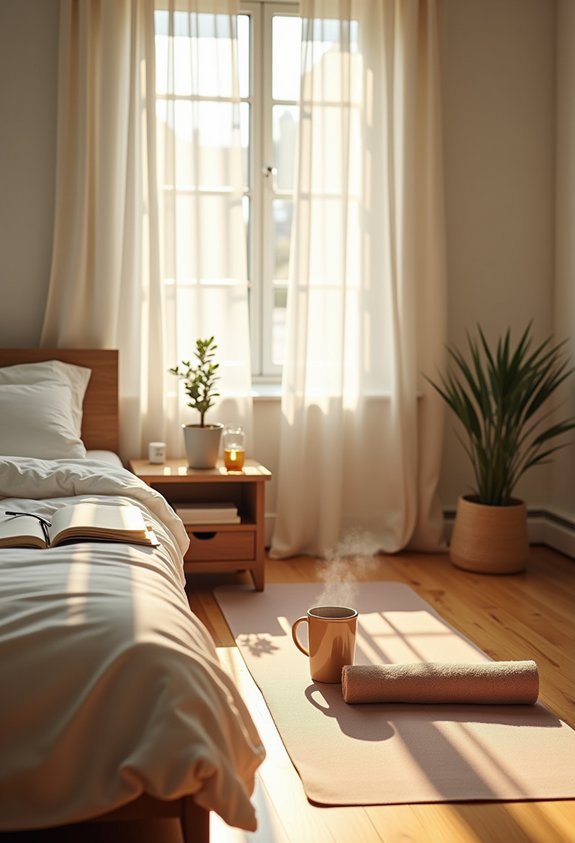

Here’s what to track:
- Social situations – Coffee with one friend vs. group dinners
- Work meetings – Which ones leave you exhausted vs. energized
- Daily tasks – Grocery shopping, phone calls, even texting
- Recovery time needed – How long until you feel normal again
This emotional awareness helps you see the truth: maybe it’s not all socializing that drains you—it’s actually those specific Tuesday team meetings.
Game-changer.
In case you were wondering
Can Introverts Be Successful in Extrovert-Dominated Workplaces Without Changing Their Nature?
Yes, you’ll thrive by leveraging introvert strengths like deep focus and thoughtful analysis. Deploy workplace strategies such as preparing for meetings beforehand, advocating for written communication, and scheduling alone time to recharge between collaborations.
How Do I Explain My Introversion to Family Members Who Don’t Understand?
Studies show 50% of families misunderstand introversion as rudeness. You’ll improve family dynamics by using clear communication strategies: explain that you recharge alone, not that you’re avoiding them. It’s about energy management, not rejection.
Is It Normal for Introverts to Feel Guilty About Canceling Social Plans?
Yes, it’s completely normal. You’re not alone in experiencing guilt feelings when canceling social obligations. Many introverts struggle with this because they value relationships but also need solitude to recharge their energy.
What’s the Difference Between Being Introverted and Having Social Anxiety Disorder?
Preference versus panic: You’ll prefer solitude with introverted traits, finding social situations draining but manageable. However, social anxiety creates paralyzing fear of judgment, causing you to avoid interactions entirely. Introversion’s natural; anxiety needs treatment.
How Can Introverts Date Successfully Without Exhausting Themselves in the Process?
Practice mindful dating by choosing one-on-one meetups over group settings, and schedule downtime between dates. You’ll maintain energy management by setting clear boundaries, keeping early dates brief, and honoring your need for alone time to recharge.
Conclusion
Look, you don’t need to become a hermit living in a cave somewhere—though honestly, that sounds pretty peaceful sometimes. You’re just protecting your energy like it’s the last slice of pizza at a party. These habits aren’t about hiding from life; they’re about showing up as your actual self instead of a drained, cranky zombie version. Start with one habit (maybe two if you’re feeling wild) and watch your energy tank finally fill back up.