How to Be a Minimalist While Honoring Your Hobbies
You can absolutely be a minimalist and keep your hobbies—start by auditing what you actually use, because let’s be honest, you’ve probably got three half-empty bottles of the same paint color hiding somewhere. Create dedicated spaces for each hobby, focus on quality tools instead of accumulating every gadget, and implement a one-in-one-out rule so your supplies don’t multiply like rabbits. The key is keeping what brings you joy and letting go of guilt-inducing projects you’ll never finish—there’s a lot more to discover about making this work.
Key Takeaways
- Audit all hobby supplies, group similar items together, and make intentional decisions about what to keep or discard.
- Create dedicated zones for each hobby with physical boundaries to prevent supply mixing and encourage regular use.
- Prioritize quality tools over quantity, selecting favorite items and enforcing a one-in-one-out rule for new purchases.
- Donate, sell, or swap unused supplies to reduce clutter while benefiting others and maintaining an organized space.
- Implement waiting periods before purchases and regularly reassess hobbies to ensure they align with current interests and values.
Audit Your Current Hobby Supplies and Materials
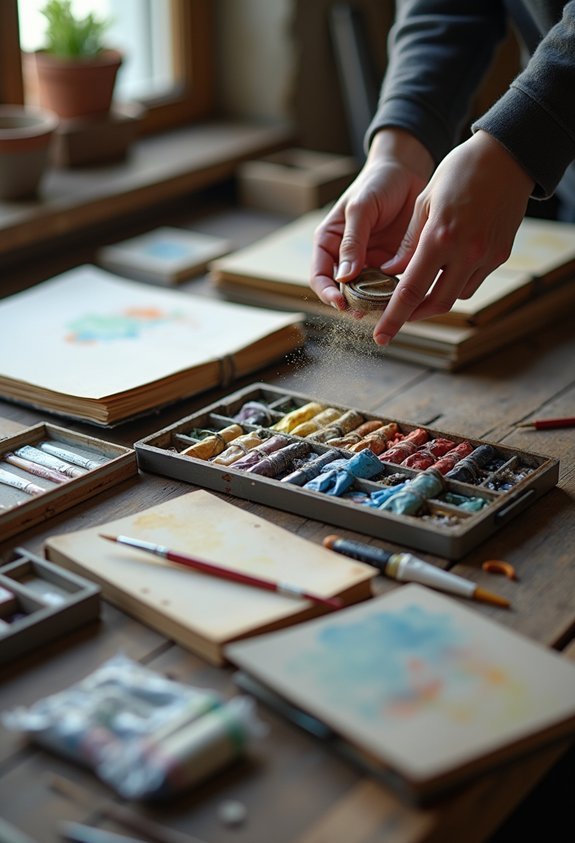
Before you can figure out what hobby supplies spark joy—or whatever we’re calling it these days—you’ve got to know what you actually own.
Pull everything out. Yes, *everything*. That means the yarn stash hiding in three different closets, the craft supplies under your bed, and those random paintbrushes living in the kitchen junk drawer (we’ve all been there).
Creating a hobby inventory doesn’t need to be complicated—just gather it all in one spot and take stock. You might discover you own five sets of colored pencils or enough fabric to open a small store.
This supply organization step feels overwhelming at first, but it’s actually freeing. You can’t make intentional decisions about your hobbies when you don’t even remember what you have. As you sort through your supplies, group similar items together to see exactly how much you have of each type—this visual assessment helps reduce decision fatigue when you’re ready to evaluate what stays and what goes.
Establish a Dedicated Space for Each Hobby
Now that you’ve rounded up your supplies, here’s the thing that’ll actually change your hobby game: giving each one its own home.
Think of it as creating hobby zones—even if you’re working with a tiny apartment (been there, still there). Your knitting doesn’t need to live with your watercolors, and your running gear definitely shouldn’t share space with your embroidery floss.
Separate your hobbies into distinct zones—your creative chaos needs boundaries, not a jumbled mess of yarn and paintbrushes.
Creative organization means getting real about what you’ve got. Maybe it’s a corner of your desk, a drawer, or—if you’re fancy—an entire closet shelf.
The point? When everything has a designated spot, you’ll actually use it instead of digging through chaos like some craft-obsessed archaeologist.
Clear boundaries make minimalism work. Optimize every shelf and drawer to contain only items with clear purposes that support your current hobbies rather than projects you abandoned months ago.
Implement the “One In, One Out” Rule for New Supplies
Once you’ve got your hobby spaces sorted, here’s the rule that’ll save you from becoming a minimalist-in-theory-only: for every new supply you bring home, something old has to go.
This is supply management at its finest.
Bought new yarn? Donate that skein you’ve been avoiding for two years (yes, the scratchy one).
Scored fancy watercolors? Time to pass along those dried-up tubes you’ve been “meaning to revive.”
It’s not about deprivation—it’s about creative balance.
You’re making room for what excites you *now* while keeping your space functional.
Think of it as curating, not restricting. Your hobbies deserve fresh energy, and sometimes that means releasing supplies that no longer spark joy.
The key is shifting from “Where can I store this?” to “What will this replace?” as you bring in new materials.
Plus, you’ll actually remember what you own.
Game-changer.
Focus on Quality Tools Over Quantity
When you’re staring at three mediocre paintbrushes that shed bristles like a nervous cat, you start to understand why one excellent brush beats a drawer full of duds.
Quality over quantity isn’t just a minimalist mantra—it’s your hobby’s best friend. Investing in essential tools that actually work means you’ll use them more, enjoy your craft more, and waste less money replacing garbage.
Here’s what quality tools give you:
- Better results that keep you motivated
- Longer lifespan (so you’re not constantly shopping)
- More joy during your actual hobby time
- Less clutter taking up precious space
Think about it: would you rather fight with five cheap scissors or glide through projects with one pair that cuts like butter?
Your hobbies deserve tools that work. Apply the clear rule that each item must earn its place in your creative life, and you’ll find yourself reaching for the same trusted tools again and again.
Complete Projects Before Starting New Ones
If you’ve got seventeen half-finished scarves, a novel stuck on chapter three, and a model airplane that’s been “almost done” since 2019, you’re living the hobby starter pack dream—and it’s probably driving you a little nuts.
Here’s the thing: finishing one project feels way better than starting ten.
Think of it like project management for your fun stuff—because even hobbies deserve a plan. Set yourself hobby deadlines (nothing scary, just realistic targets) and resist shiny new ideas until you’ve crossed the finish line on what you’re already doing.
You don’t need to rush through everything. Just pick one thing, see it through, and celebrate when it’s actually done.
That completion high? It’s worth the wait—and your closet will thank you for not becoming a graveyard of good intentions. When you reduce distractions by limiting unfinished projects, you free up mental energy to fully engage with what genuinely excites you.
Set Boundaries on Collection Sizes
Setting a number limit sounds harsh at first, like you’re putting your joy in a cage—but really, you’re just giving it some boundaries so it doesn’t eat your entire apartment.
Boundaries aren’t about restricting your happiness—they’re about keeping it from swallowing your living space whole.
Here’s how to make collection limits actually work:
- Pick a physical container. Whatever fits in that box (or shelf, or drawer) is what you keep—no cheating with bigger storage solutions later.
- Use the one-in-one-out rule. New yarn means old yarn goes, simple as that.
- Count your favorites. Maybe you need exactly twelve paints, not forty-seven.
- Revisit annually. Your collection limits can change as your interests shift.
The trick isn’t deprivation—it’s intentionality. You’re choosing quality engagement over endless accumulation, which honestly makes hobbies way more fun anyway. When items serve a clear purpose in your daily life, you’ll spend less time managing stuff and more time actually enjoying your hobbies.
Digitize When Possible to Reduce Physical Storage

Your hobby collection doesn’t always need to take up physical space—sometimes the best storage solution is no storage at all.
Think digital.
Sheet music? Scan it. Recipe collections? Photograph them. Craft patterns taking over your filing cabinet? Cloud storage solutions can hold thousands without claiming a single shelf.
Digital organization techniques let you keep everything you love (yes, even that weird knitting pattern from 2012) without the physical clutter guilt.
You’ll actually *find* things easier too—because let’s be honest, that recipe box system wasn’t working anyway.
Books, magazines, instructional videos—they’re all available digitally now.
You’re not giving up your hobby; you’re just giving up the dust-collecting part.
And your back will thank you next time you move.
A decluttered digital space reduces cognitive load and helps you focus on what matters most—actually enjoying your hobbies instead of managing the chaos around them.
Share, Donate, or Sell Supplies You No Longer Use
Letting go of hobby supplies you’ve outgrown isn’t admitting defeat (despite what your brain keeps whispering at 2 AM).
It’s making room for what actually matters now—and giving someone else a chance to fall in love with those materials.
Here’s where your unused supplies can go:
- Supply swaps with fellow hobbyists (you might score something you’ll actually use)
- Community donations to schools, libraries, or youth programs
- Local buy-nothing groups on social media
- Selling through marketplace apps for extra cash
That scrapbooking phase from 2019?
Someone’s desperately searching for those exact stickers right now.
Your old yarn stash could become a beginner’s first project.
You’re not losing possibilities—you’re creating them for others.
Discarding these items can also serve as emotional release, honoring the creative journey they represented without keeping you tied to a version of yourself you’ve moved beyond.
Practice Mindful Purchasing With a Waiting Period
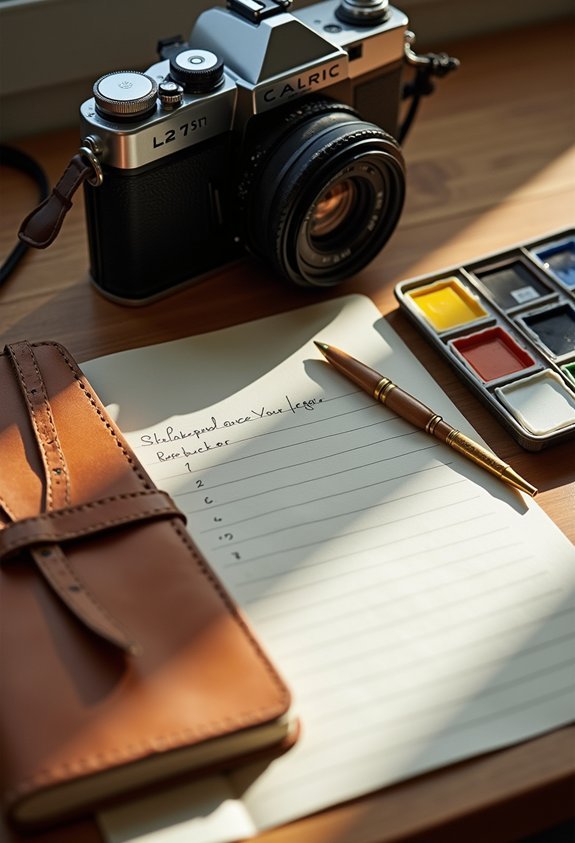
Before you click “add to cart” on those vintage fountain pens you suddenly need (thanks, algorithm), try hitting pause instead.
Set a waiting period—maybe thirty days for big purchases, a week for smaller ones. This simple trick transforms mindless spending into mindful spending, giving your brain time to separate genuine interest from impulse.
Waiting transforms impulse into intention—your future self will thank you for the pause between want and purchase.
Here’s what usually happens: you forget about half the stuff you wanted. The hobby crush fades, and you realize you don’t actually need another embroidery kit when you haven’t touched the first one.
Delayed gratification isn’t about denying yourself forever—it’s about making sure you’re buying things that genuinely enhance your hobby life.
The waiting period lets your rational brain catch up to that initial emotional pull, helping you see whether you’re buying out of boredom or genuine passion.
If you’re still thinking about those watercolors after thirty days? They’re probably worth it.
Regularly Reassess Which Hobbies Truly Bring You Joy
Just because you started something doesn’t mean you’re obligated to keep doing it forever—hobby guilt is real, but it’s also completely unnecessary.
Think of hobby evaluation as joyful exploration, not a test you can fail. Every few months, check in with yourself—honestly—about what still lights you up.
Ask yourself:
- Does this hobby still make me happy, or am I just going through the motions?
- Would I miss it if I stopped tomorrow?
- Am I keeping supplies out of guilt rather than genuine interest?
- Does this activity energize me or drain me?
Your interests will change (and that’s perfectly okay).
You may also like:




Maybe you loved watercolors last year but now they just stress you out. That’s normal, not failure.
Release what doesn’t serve you anymore.
Practice making essential choices—keep the hobbies that truly align with your values, release those that no longer fit, or redesign how you engage with them to match your current season of life.
In case you were wondering
How Do I Explain My Minimalist Hobby Approach to Friends Who Gift Supplies?
You’ll want to practice gift etiquette by gently sharing your supply preferences with friends. Explain you’re curating a minimal collection and prefer consumables or experiences. They’ll appreciate your honesty and can support your intentional approach.
Can Minimalism and Hobbies Coexist Without Sacrificing Creative Freedom?
Yes, they’ll thrive together when you prioritize creative expression over accumulation. You’ll discover that mindful consumption—choosing versatile, quality supplies you’ll actually use—enhances rather than limits your artistic freedom and experimentation.
What if My Hobby Requires Specialized Materials That Aren’t Multipurpose?
You’ll prioritize quality over quantity with your specialized materials. Before purchasing, you’ll explore creative solutions like borrowing, renting, or sharing with fellow hobbyists. Keep only what you actively use, not what you might need someday.
How Do I Handle Seasonal Hobbies That Need Different Supplies Year-Round?
You’ll maintain minimalism through seasonal organization by implementing a supply rotation system. Store off-season materials in labeled bins, keeping only current hobby supplies accessible. This approach prevents clutter while ensuring you’re prepared when each season arrives.
Should I Abandon Expensive Hobbies That Don’t Align With Minimalist Values?
Don’t throw the baby out with the bathwater—expensive hobbies aren’t anti-minimalist if they bring genuine joy. Evaluate cost vs. passion honestly. Keep hobbies with sustainable value to your well-being, not arbitrary price tags.
Conclusion
Here’s the thing—and isn’t it funny how this works?—the moment you start clearing out your hobby supplies, you’ll actually want to *use* them more. You’re choosing quality over clutter, which means you’ll finally finish that scrapbook (or knitting project, or model airplane). Your hobbies deserve better than being buried in bins. So do you. Start small, stay honest with yourself, and watch your creativity flourish.