The Decluttering Method for Visual People
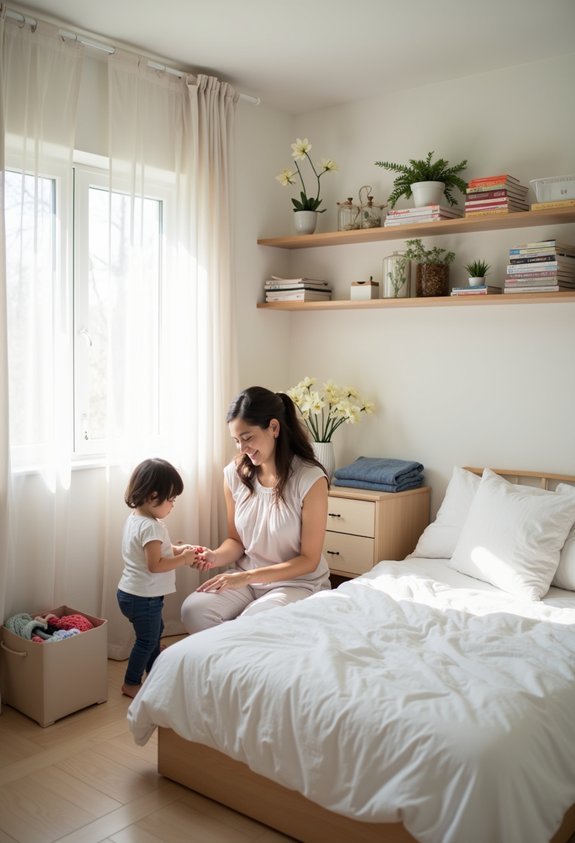
If you’re a visual thinker, the key to decluttering isn’t hiding everything away—it’s making things visible in an organized way. Swap closed cabinets for open shelving, use clear containers instead of opaque bins, and add color-coded labels with pictures (not just words). Your brain remembers what it sees, so when items are out of sight, they literally don’t exist to you. This method transforms clutter into calm by working with your brain’s wiring, not against it, and there’s a specific approach for every room in your home.
Key Takeaways
- Use clear containers and open shelving to maintain visibility of belongings, preventing duplicate purchases and reducing cognitive overload.
- Implement color-coding systems with warm colors for urgent items and cool colors for references to create visual hierarchy.
- Add labels combining pictures and words to enhance recognition speed and align with visual thinking preferences.
- Organize vertically using wall space for eye-level access, maximizing visibility while minimizing physical clutter.
- Limit organizational categories to 3-5 to prevent overwhelming chaos while sorting belongings by type to identify duplicates.
Why Traditional Organization Fails Visual Thinkers
Because you’re a visual person, you’ve probably tried every organizing system out there—only to watch it fall apart within a week.
Here’s why: traditional methods hide everything in drawers, bins, and closed cabinets. Out of sight, out of mind—and suddenly you’re buying a third stapler because you forgot where you put the others.
Visual clutter isn’t your problem. It’s actually trying to work *against* how your brain functions that creates cognitive overload.
Those “clean desk” people? They’re wired differently.
You need to *see* your stuff to remember it exists. When everything’s tucked away in matching containers (no matter how Pinterest-perfect they look), your brain just can’t keep track. That’s not laziness—it’s neurology.
The solution isn’t fighting your visual nature.
It’s working with it.
Physical space reflects mental clutter and the distractions that keep you from focusing on what truly matters.
The Core Principles of Visible Storage
Here’s what makes visible storage actually work:
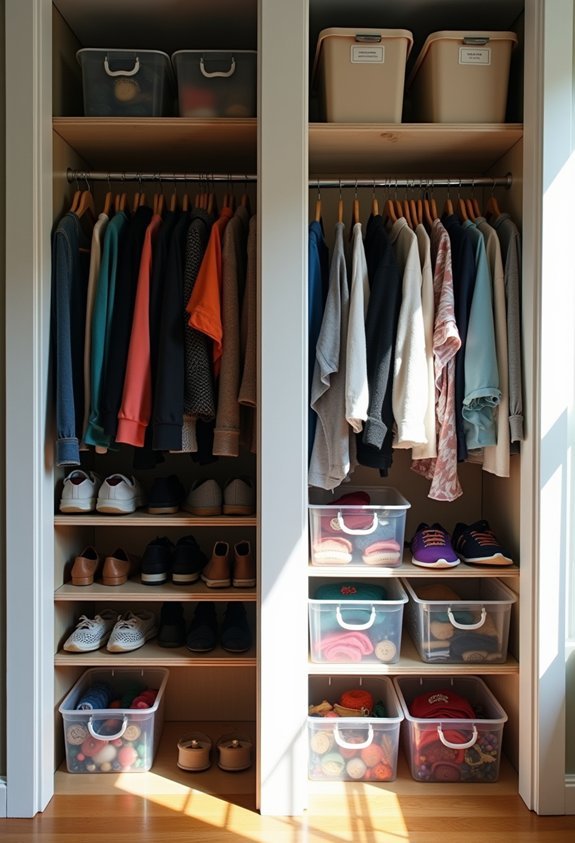
- Clear containers let you see what’s inside without opening every single box.
- Open shelving beats closed cabinets because out of sight really does mean out of mind.
- Labels with pictures help your visual brain recognize things faster.
- Color-coding turns organization into something your eyes can process instantly.
- Vertical displays use wall space so everything’s at eye level.
Think of it as giving your brain the visual roadmap it’s been craving all along.
Transparent Containers and Open Shelving Solutions

When you peek into a drawer and instantly spot that USB cable you need—instead of digging through a tangled mystery pile for ten minutes—that’s the magic of transparent storage doing its job.
Clear containers transform chaos into calm because you’re actually seeing what you own. No more buying duplicate scissors (you already have five, remember?).
Transparent storage eliminates the duplicate-buying problem—when you can see those five scissors staring back at you, mystery purchases become impossible.
Open shelving works the same way—everything’s right there, visible and accessible.
The aesthetic appeal? It’s real. Transparent organization forces you to keep things tidy because there’s nowhere to hide the mess. You’ll naturally maintain order when your stuff’s on display.
Glass jars for pantry staples, acrylic bins for craft supplies, wire baskets for everyday items—these solutions keep your visual brain happy and your spaces functional.
When visual clutter competes for your brain’s attention, it raises stress hormones and scatters your thoughts, making transparent storage not just practical but a genuine act of mental care.
Color-Coding and Label Systems That Actually Work
Your brain lights up when you see rainbow-organized filing systems on Pinterest—but let’s be honest, you’ve tried color-coding before and it flopped within a week.
Here’s why: you picked colors randomly instead of using color psychology to your advantage. Red files for bills? That’s visual stress every single day.
Try this instead:
- Use warm colors (yellow, orange) for active projects needing immediate attention
- Cool colors (blue, green) work perfectly for reference materials and archived stuff
- Create visual hierarchy by making urgent items brighter and duller shades for background tasks
- Label with pictures AND words—your visual brain processes images 60,000 times faster
- Stick to 3-5 main categories maximum (more becomes overwhelming chaos)
The system works when it matches how you actually think. When you translate your visual preferences into if-then statements like “If it’s a current project, it gets a yellow folder,” you eliminate the mental fatigue of re-deciding your system every single time.
Room-by-Room Visual Organization Strategies
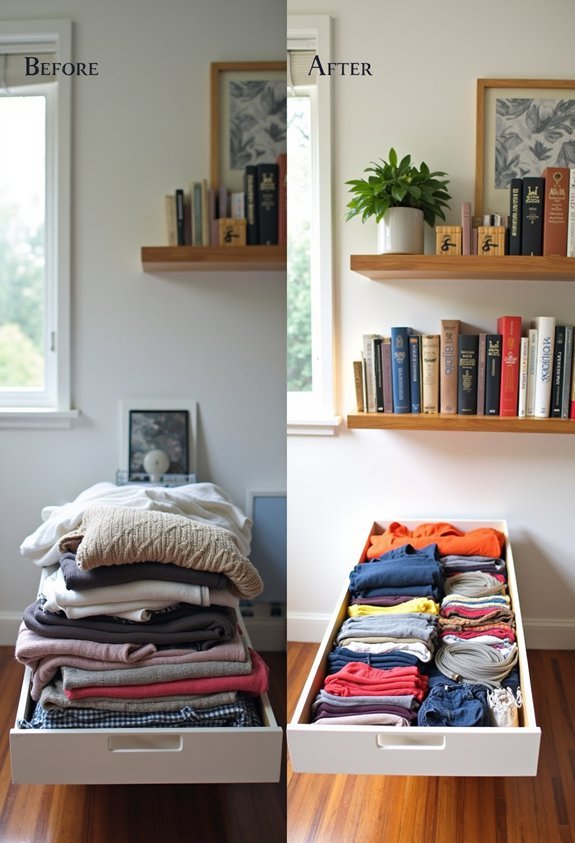
The kitchen drawer that’s secretly become a graveyard for 47 random batteries, twist ties, and—wait, is that a flip phone from 2009?—needs a different approach than your closet crammed with clothes you can’t even see.
Each room deserves its own visual game plan.
Your bedroom thrives on open shelving where you’ll actually remember what you own—because out of sight really does mean forgotten forever.
Consider your room layout before buying storage solutions that’ll just become expensive clutter holders.
You may also like:





Bathrooms need clear containers (so you can spot that backup shampoo bottle before buying a fifth one), while living rooms benefit from designated “drop zones” for remote controls.
Space utilization isn’t about cramming more stuff in—it’s about making what you have visible and accessible.
Sort belongings by category rather than by room to expose duplicates and make clearer decisions about what actually deserves space in your home.
In case you were wondering
How Do I Start Decluttering When I Feel Overwhelmed by Mess?
Start with one visible surface you’ll see daily. Visual overwhelm strategies work best when you focus on small, noticeable wins. These decluttering mindset tips help: you’re not organizing everything—you’re creating one calm space first.
What Should I Do With Sentimental Items I Can’t Display?
Can’t showcase everything you treasure? Store sentimental items you’re keeping in labeled memory storage boxes with photos of contents on the outside. You can also rotate creative displays seasonally, giving each piece its moment.
How Often Should I Reassess My Visual Organization System?
You’ll want to reassess your visual organization system every three to six months. This reassessment frequency ensures your visual cues remain effective and relevant to your current needs. Seasonal changes naturally prompt you to evaluate what’s working and what isn’t.
Can Visual Decluttering Methods Work in Shared Living Spaces?
Yes, you can successfully implement visual decluttering in shared spaces by establishing clear zones with designated purposes. Create visual harmony through consistent color schemes, agreed-upon storage solutions, and collaborative decisions that respect everyone’s aesthetic preferences and organizational needs.
What’s the Best Way to Maintain Organization Long-Term?
You’ll succeed by implementing daily maintenance strategies like the “one-touch rule” and placing visual reminders in high-traffic areas. Schedule weekly 15-minute resets, photograph your organized spaces, and post these images where you’ll see them constantly.
Conclusion
you’re not messy—you just needed a system that matches how your brain actually works. And now you’ve got one. Visual organization isn’t about fighting who you are; it’s about making decluttering so obvious (literally) that you can’t help but succeed. So grab those clear bins, unleash your label maker, and turn your space into something that finally makes sense to your eyes.