How I Handle Gift Cards Without Overspending
Treat gift cards like actual cash in your budget—not bonus money that doesn’t count. Log every card you receive with the amount and store, then assign it to a specific category (groceries, clothing, whatever you’d normally budget for). Before you shop, set a firm spending limit and stick to it, even if there’s money left on the card. Watch out for the “free shipping minimum” trap—it’s cheaper to pay $5 shipping than buy $15 of stuff you don’t need just to qualify. The key is using cards only for planned purchases, and there’s a simple system that makes this automatic.
Key Takeaways
- Track all gift cards in a notebook or phone app with store name, amount, and date received to prevent forgetting them.
- Treat gift cards as cash in your budget and allocate them to specific spending categories rather than bonus money.
- Only use gift cards for planned purchases by maintaining a needs list and avoiding impulse buys.
- Set a firm spending limit before shopping, regardless of the gift card balance, to prevent overspending.
- Avoid meeting free shipping minimums by choosing in-store pickup or waiting for promotions instead of unnecessary purchases.
I Log Every Gift Card I Receive in a Dedicated Tracker
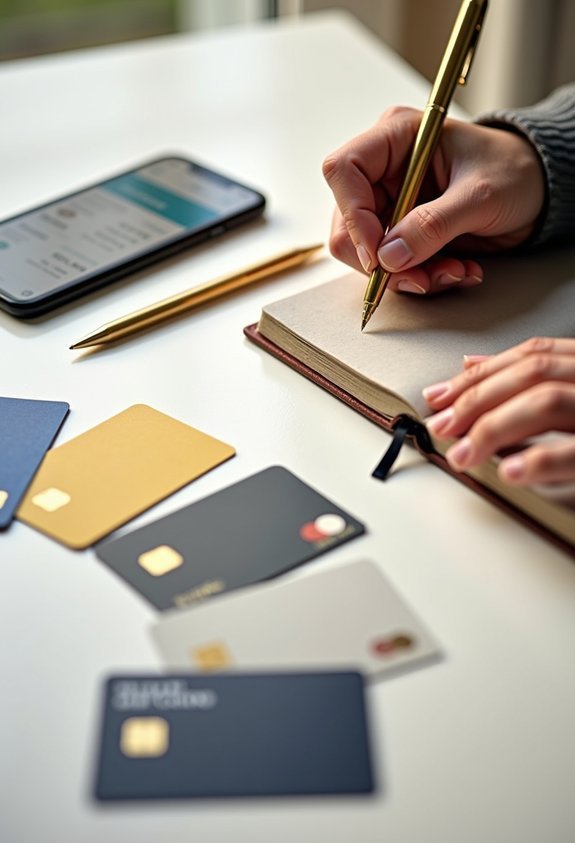
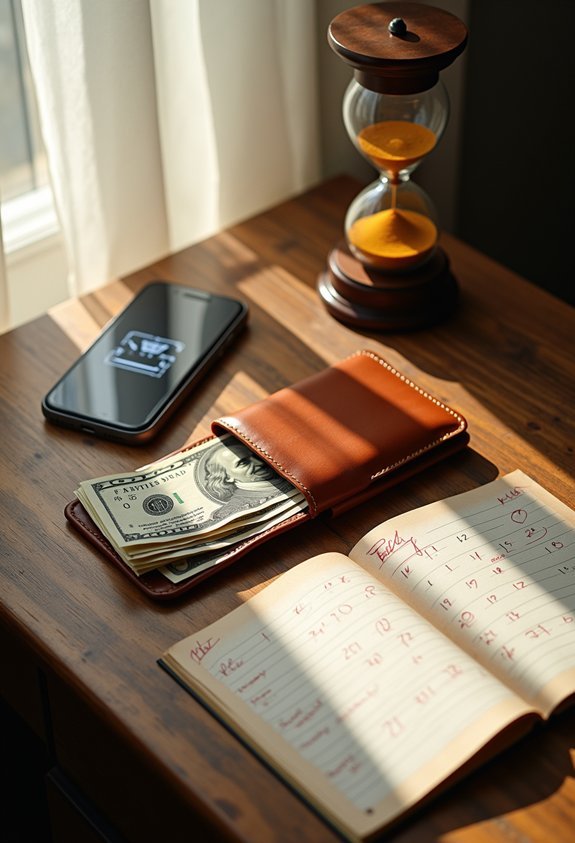
When I first started tracking my gift cards, I grabbed a simple notebook and scribbled down every single one I got—birthdays, holidays, that random “thanks for watching my cat” card from my neighbor.
I started with a basic notebook, writing down every gift card I received—birthdays, holidays, even that cat-sitting thank-you card.
It wasn’t fancy, but it worked.
Here’s what I write down: the store name, the amount, and when I received it. That’s it. No complicated gift card organization system needed (though you can absolutely get fancier if that’s your thing).
These days, I use my phone’s notes app as one of my main tracking tools—it’s always with me, so I can check balances while I’m actually shopping. Game changer.
The point isn’t perfection. It’s just knowing what you’ve got so those cards don’t disappear into the void.
I also set reminders to review my list weekly, which helps me catch any cards I might be tempted to spend on impulse purchases during late-night browsing sessions.
I Treat Gift Card Balances Like Cash in My Budget
Tracking your gift cards is only half the battle—the real magic happens when you start treating them like actual money in your budget.
Here’s what I mean: when you receive a $50 Target gift card, mentally “spend” that amount from your household budget immediately. Move those dollars into savings or debt payoff—wherever you’d benefit most.
This gift card management approach prevents the classic trap of viewing gift cards as “bonus money” (spoiler alert: they’re not). It’s one of the smartest budgeting strategies because you’re literally getting paid twice otherwise.
The gift card covers your planned Target run. The cash you would’ve spent? That’s now working harder for your actual financial goals.
It feels counterintuitive at first, but trust me—this mindset shift changes everything. Just like testing private-label options in low-risk categories, this strategy lets you redirect money toward goals that actually matter without feeling deprived.
I Set Spending Limits Before I Start Shopping
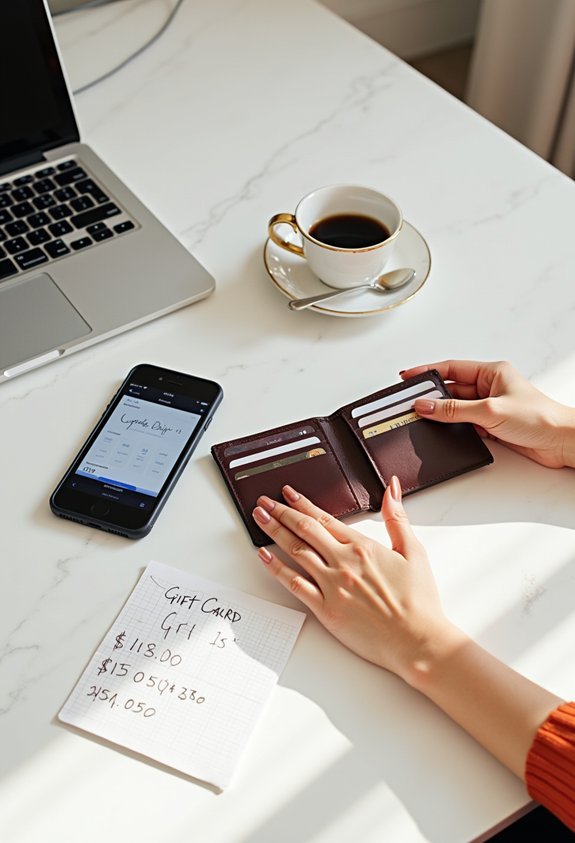
Because gift cards make money feel fake, I always decide my spending limit before I even walk through the doors (or click “add to cart”).
Here’s my trick: I write down the exact amount I’m willing to spend—even if the card has more on it. This simple budgeting strategy keeps me from that “oh, it’s free money!” trap.
The spending psychology is wild, right? A $50 gift card feels like play money, so we suddenly “need” things we’d never buy with our debit cards.
Before shopping, I ask myself: Would I buy this if I were paying cash?
If the answer’s no, I don’t buy it—no matter how tempting.
Setting that limit first protects you from impulse purchases. I also translate the gift card amount into hours of work to help me assess whether items are truly worth it—asking myself if each purchase is worth that portion of my life.
I Avoid the “Free Shipping Minimum” Trap
If I’m being honest, the “free shipping at $35” message has gotten me more times than I’d like to admit—and retailers know exactly what they’re doing.
Here’s my game plan for smart shipping strategies and gift card budgeting:
- Check if the store has free in-store pickup (saves you every time)
- Calculate if that $7 shipping fee is actually cheaper than buying extra stuff you don’t need
- Look for “ship to store” options that dodge fees completely
- See if combining multiple gift cards gets you over the threshold naturally
- Wait a few days—many retailers offer free shipping promotions regularly
The math is simple: spending $15 more to avoid $5 shipping isn’t saving money, it’s losing $10.
Your gift card doesn’t care about shipping minimums—and neither should you.
These shipping minimum tactics are designed as frictionless purchasing triggers that make it feel easier to spend more than to accept a small fee.
I Use Gift Cards for Planned Purchases, Not Impulse Buys

The moment a gift card hits my wallet, my brain suddenly invents seventeen “needs” I didn’t have five minutes ago.
It’s like free money—except it’s not, and my impulse control vanishes instantly.
Here’s what works: I treat gift cards exactly like cash for planned purchases only.
If I wasn’t already saving for those boots, the gift card doesn’t magically make them necessary.
I keep a running list (revolutionary, I know) of things I actually need.
When a gift card arrives, I check the list first—not the store’s “new arrivals” section designed to destroy my willpower.
The gift card doesn’t create the need. It just helps fund what you’d already decided to buy.
That mindset shift? Total game-changer for protecting your budget.
Gift cards are especially dangerous because they trigger the same psychological triggers that drive impulse spending—the illusion of “free” money removes the usual friction between wanting and buying.
I Set Reminders So Cards Don’t Expire Unused
You know what’s worse than impulse-buying with a gift card? Letting it expire completely unused—it’s like throwing money in the trash.
I’ve done this more times than I’ll admit (RIP that coffee shop card from 2019), so now I set up reminders to save myself from gift card expiration heartbreak.
Here’s my simple system using reminder apps:
- Phone calendar alert three months before expiration
- Sticky note on my bathroom mirror for high-value cards
- Photo of the card saved in my notes app
- Monthly “check all gift cards” reminder on the first
- Text buddy system with my sister who also hoards cards
Takes five minutes to set up, saves actual money.
Your future self will thank you when that reminder pops up instead of finding an expired card while cleaning out your wallet.
When I do use a gift card, I treat it like cash in my budget and track the transaction in my spending categories so I stay aware of where my money is actually going.
I Combine Gift Cards With Sales, Not Full-Price Splurges
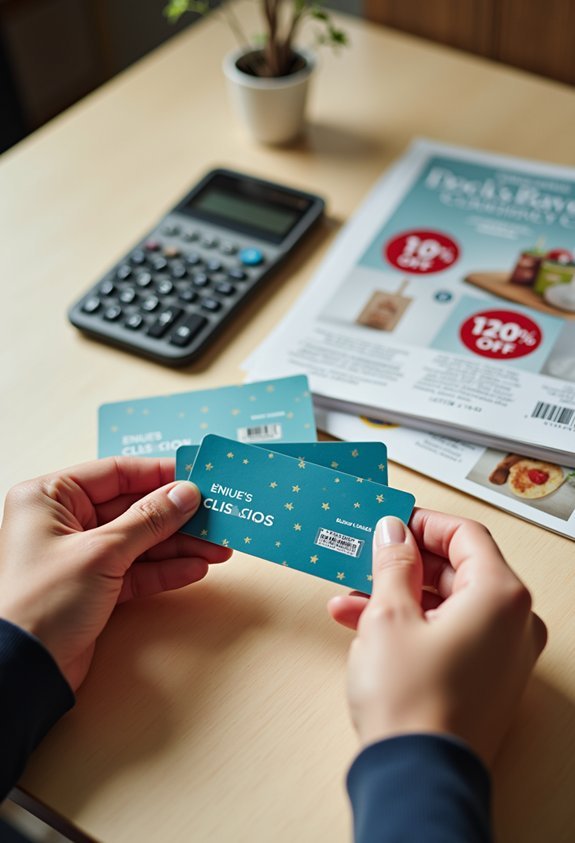
When I get a gift card, my brain immediately wants to treat it like monopoly money and blow it on whatever catches my eye at full price.
Gift cards feel like free money, which makes my brain want to immediately spend without thinking about actual value.
But here’s the thing—I’ve learned that strategic shopping makes that $25 card feel like $50.
I wait for sales, then pounce. Black Friday, end-of-season clearances, those random Tuesday markdowns—that’s when I use my gift cards.
It’s basically gift card stacking on steroids (okay, maybe just smart planning, but let me have this).
Instead of buying one full-price sweater, I snag two or three on clearance with the same card value.
You may also like:




The dopamine hit is honestly better because I’m getting *more* stuff while spending *less* actual money.
Plus, combining gift cards with already-discounted items? That’s the ultimate win.
This approach is really just intentional budgeting—making every dollar (even the gifted ones) work harder toward what I actually value.
In case you were wondering
Can I Exchange a Gift Card for Cash Instead of Merchandise?
You’ll find that most retailers’ gift card policies don’t allow cash exchange. However, some states legally require stores to provide cash for gift cards under certain dollar amounts, typically under $10. Check your state’s specific regulations.
What Should I Do if a Store Closes Before I Use My Gift Card?
Check your gift card policies immediately when you learn about the store closure. You’ll typically have several store closure options, including redemption during liquidation sales, transfers to parent companies, or filing claims with bankruptcy administrators for potential refunds.
Are There Fees for Keeping a Gift Card Balance Unused?
You’ll be relieved to know that most gift cards don’t charge maintenance fees anymore. Federal law protects you from gift card expiration for five years, and fees can’t kick in until after twelve months of inactivity.
Can I Transfer My Gift Card Balance to Someone Else?
Most gift cards have transfer restrictions that prevent you from moving balances between people. You’ll need to check specific gift card policies, as some retailers allow transfers while others don’t permit any balance movements.
Do Gift Cards Count as Taxable Income When Received as Gifts?
No, you don’t owe taxes on gift cards received as personal gifts. Gift card taxation and gift card regulations treat them like cash gifts, which aren’t taxable income for recipients under IRS rules.
Conclusion
Gift cards are like little presents that keep on giving—but only if you treat them with respect. Use these strategies to spend smart, not stressed. Track what you’ve got, plan before you shop, and don’t let stores trick you into spending more than the card’s worth. Your future self (and your wallet) will thank you for staying in control instead of getting carried away.