11 Decluttering Tips for People With ADHD
If you’ve got ADHD, decluttering isn’t about massive overhauls—it’s about working with your brain, not against it. Start with visible hotspots like your entryway table, set a timer for just 10-15 minutes to avoid burnout, and use clear bins so you’ll actually remember what you own. Make decisions based on what you’ve used in the past year (not the fantasy version of yourself), schedule weekly decluttering sessions like dentist appointments, and snap before photos to track your wins when progress feels invisible—there’s way more strategies ahead.
Key Takeaways
- Start with visible high-traffic areas like entryways and kitchen counters using 10-15 minute timed sessions for quick wins.
- Apply “One In, One Out” rule and assign designated spots for every item using clear labeled bins.
- Take before photos and sort items into Keep, Donate, Trash, Maybe categories to track progress and simplify decisions.
- Sneak decluttering into daily routines by returning items during bathroom trips or clearing tables after meals.
- Schedule weekly 15-minute decluttering appointments and focus on items used within the past 6-12 months only.
Start With Visible Clutter in High-Traffic Areas

When you’ve got ADHD, the worst part about clutter isn’t just that it exists—it’s that you stop seeing it after a while. Your brain literally tunes it out like background noise.
Your ADHD brain stops registering clutter after a while, turning visible chaos into invisible background noise you can’t even see anymore.
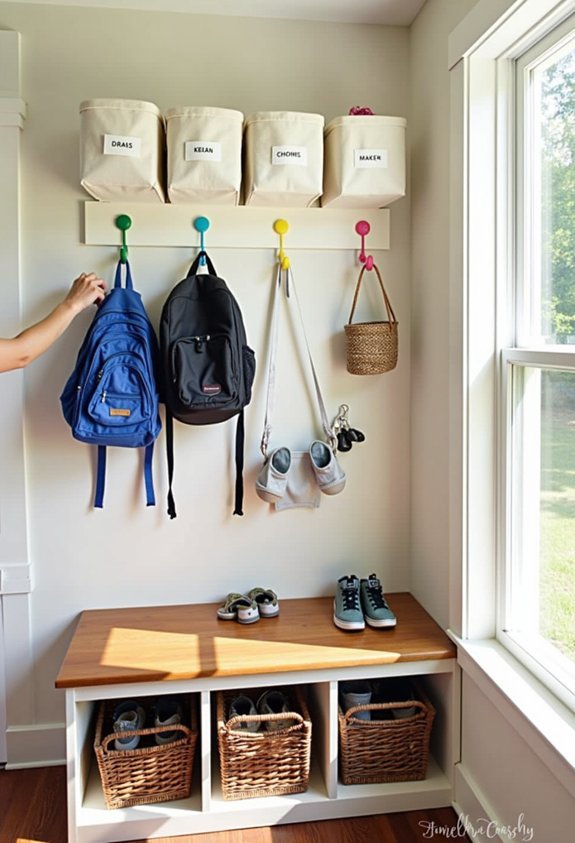
That’s why you need to tackle visible hotspots first—the places everyone (including you) actually notices. Think entryway tables, kitchen counters, or that chair in your bedroom that’s become a laundry mountain.
These high-traffic areas are your clutter triggers. They’re where stuff lands when you walk in the door, and they multiply faster than you can say “I’ll deal with this later.”
Start here because quick wins matter. Clear one counter, and suddenly your whole kitchen feels different.
You’ll actually *see* the progress—which your ADHD brain desperately needs to stay motivated. Visual excess doesn’t just look messy—it creates mental overload that keeps your brain in a constant state of tracking mode, making it harder to focus on anything else.
Set a Timer for Short Decluttering Bursts
Your brain wasn’t built for marathon decluttering sessions—and that’s completely okay.
Short bursts are your secret weapon here, because they work with your ADHD brain instead of against it.
Here’s the deal: set a timer for 10-15 minutes and commit to just that timeframe. No more, no less. Timer techniques help you avoid that overwhelming “I’ll be doing this forever” feeling that makes you want to quit before you even start.
When the timer goes off, you’re done. Walk away guilt-free.
These mini-sessions prevent burnout and—bonus—they actually add up faster than you’d think. You’ll be amazed at what you can accomplish when you’re not dreading a three-hour organizing nightmare.
Tackling one small space at a time reduces cognitive load and creates those small victories that signal safety and control to your brain.
Use the “One In, One Out” Rule

Short bursts help you clear what’s already there, but let’s be real—stuff keeps coming into your home whether you want it to or not. (Impulse purchases, anyone?)
That’s where the “One In, One Out” rule becomes your new best friend, and it’s beautifully simple: every time something new enters your space, something old has to leave.
Bought a new sweater? An old one goes to donation.
Got another coffee mug? Time to say goodbye to that chipped one you’ve kept for three years.
This rule works because it creates a natural reward system—you still get the dopamine hit from acquiring something new, but you’re also preventing clutter buildup.
Instead of asking “Where can I store this?”, shift your thinking to “What will this replace?”—a simple mental swap that turns shopping into an intentional decision rather than mindless accumulation.
And yes, emotional attachments will make this tricky sometimes, but remember: you’re choosing *forward* over *stuck*.
Create Designated Homes for Everything You Keep
If everything in your home has a designated spot—and I mean *everything*—your ADHD brain doesn’t have to work nearly as hard to stay organized.
No more standing in the middle of a room holding scissors, wondering where they live.
Set up designated zones for similar items (office supplies together, charging cables in one drawer, whatever makes sense).
The key is consistency—not perfection.
The goal isn’t to maintain magazine-worthy perfection—it’s to build systems that work even on your worst brain days.
Here’s what helps:
- Use clear bins and item labeling so you don’t have to remember what’s inside each container
- Make homes obvious and accessible, not hidden in the back of closets where you’ll forget they exist
- Take photos of organized spaces to remember what “done” looks like when things inevitably get messy again
Organizing by category rather than by room helps you spot duplicates and makes it easier to decide what actually deserves a permanent home.
Your stuff deserves addresses too.
Take Photos Before You Start to Track Progress
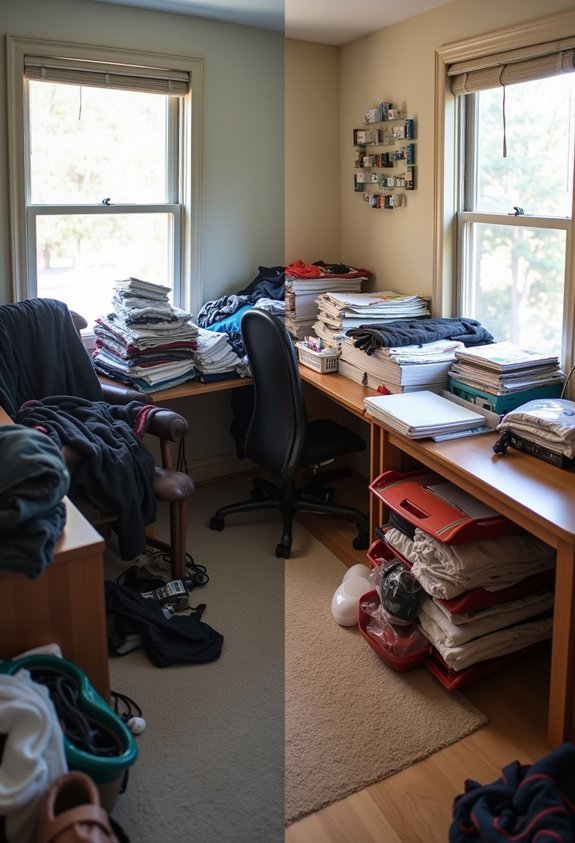
That’s where photo journaling saves the day.
Snap a picture before you begin, even if (especially if) the space looks terrible. Your brain won’t remember what the “before” actually looked like once you’re knee-deep in sorting piles.
These photos become your progress motivation when you inevitably feel like quitting. You’ll look back and think, “Wait, I *did* make progress—I just can’t see it because everything’s spread out right now.”
Document the journey. Take photos during the process too, not just before and after.
Visual evidence helps counter decision fatigue when you’re evaluating whether items still serve your current daily routines.
You’re doing better than you think.
Sort Items Into Four Clear Categories
Four piles—that’s all you need, and honestly, any more than that will turn your decluttering session into a decision-making nightmare your ADHD brain will absolutely hate.
Your sorting system should include these category labels:
- Keep (stuff you actually use, not stuff you might use someday)
- Donate (good condition items that someone else will love)
- Trash (broken, stained, or genuinely unusable things)
- Maybe (your safety net for tough decisions—review this pile last)
Don’t overthink the categories. You’re not creating a library cataloging system here.
Keep it simple—you’re sorting stuff, not designing a filing system for the Library of Congress.
The beauty of four clear piles is that you’re making the same decision over and over, which creates momentum. Your brain loves patterns, even when it’s rebelling against the actual task.
Touch each item once, make a quick call, and move on. Indecision about where items belong can lead to perfectionism paralysis, so setting these clear boundaries helps you keep moving forward without getting stuck.
Keep Donation Bags Ready in Every Room

The biggest mistake you can make is waiting until you’ve decided to donate something before finding a bag to put it in—because by the time you locate a bag, you’ll have already talked yourself into keeping that sweater you haven’t worn since 2019.
Strategic donation bag locations make all the difference. Keep a reusable shopping bag or small bin in your bedroom closet, bathroom cabinet, and living room corner—anywhere you’re likely to spot something donate-worthy.
The key to maintaining donation motivation? Making it ridiculously easy to follow through. When that random Tuesday impulse hits and you suddenly realize those jeans will never fit again (it’s fine, we’ve all been there), you need zero barriers between decision and action.
Just toss and move on.
This approach works because open space in storage prevents the common trap of overstuffing areas that should stay clear and functional.
Declutter While You’re Already Moving
Now that you’ve got your donation bags in place, let’s talk about sneaking decluttering into activities you’re already doing—because honestly, who’s time to schedule a separate “decluttering session”?
These decluttering strategies work with your natural movement motivation (instead of against it):
- Bathroom trips: Grab one random item on your way and toss it where it belongs—expired medication, that bobby pin, whatever.
- Commercial breaks: During TV time, collect three things that don’t belong in the room and relocate them.
- Waiting for coffee: While your coffee brews (or your leftovers heat up), tackle the junk mail pile for exactly two minutes.
- Kitchen meal resets: After eating, take just 60 seconds to clear the table and put food away immediately—this prevents overwhelming buildup later.
The secret? You’re already standing up. You’re already moving around. Might as well make it count, right?
Use Clear Storage Containers Instead of Opaque Ones
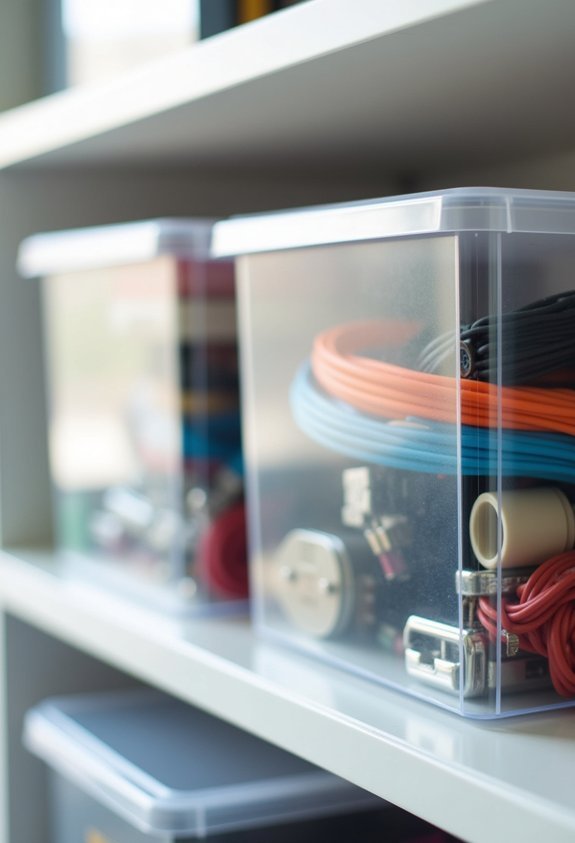
When you can’t see what’s inside a container, it basically doesn’t exist anymore—welcome to the ADHD brain, where “out of sight, out of mind” isn’t just a saying, it’s our entire operating system.
Clear bins are game-changers because you’ll actually remember you own that thing you desperately need right now. No more buying duplicates of scissors you already have (hidden somewhere in an opaque box, naturally).
Invest in size variety—small bins for office supplies, larger ones for seasonal clothes—so everything has its perfectly-sized home.
Bonus tip: try color coded organization with clear containers that have different colored lids. Red for urgent stuff, blue for craft supplies, whatever works for your brain.
Adding labels to your clear containers helps you group similar items together, making it easier to assess what you have and reducing the mental load when you need to find something specific.
You’re not being difficult; you’re working with your brain, not against it.
Make Decisions Based on Present Use, Not Future Maybes
ADHD brains love the fantasy of Future You—the organized person who meal preps, exercises daily, and uses every kitchen gadget.
Stop decluttering for the person you wish you were and start organizing for the person you actually are.
But decluttering means honoring your present priorities, not the imaginary lifestyle you’ve been Pinterest-dreaming about.
Ask yourself: have I used this in the past year? If not, it’s taking up space that Present You actually needs.
Here’s what to focus on:
- Keep items you’ve used within 6-12 months (realistic expectations matter here)
- Let go of aspirational stuff that makes you feel guilty every time you see it
- Trust that if you need something later, you can borrow or buy it
Instead of stockpiling one-off gadgets for unlikely scenarios, keep versatile tools that support multiple aspects of your actual daily routine.
Your space should support who you’re right now.
Build in Regular Decluttering Appointments on Your Calendar

One-time decluttering marathons feel amazing—until three months later when the chaos has crept back in and you’re drowning in stuff again.
The fix? Schedule it like you’d a dentist appointment (because let’s be honest, you’d forget both without calendar reminders).
Block out 15-minute weekly check-ins on your calendar. That’s it—just fifteen minutes. You’re not reorganizing your entire house; you’re maintaining what you’ve already done.
You may also like:





Pick the same day and time each week. Sunday evenings work great, or maybe Friday afternoons when you’re already mentally checked out anyway.
Set those calendar reminders to actually ping you. Multiple times if needed.
Your ADHD brain loves consistency even when it pretends otherwise. These mini-appointments prevent the overwhelming backslide that makes you want to give up entirely.
In case you were wondering
How Can Medication Timing Affect My Decluttering Motivation and Focus?
Your ADHD medication works best during specific focus peaks, typically 1-2 hours after taking it. Schedule decluttering tasks during these windows when your medication’s at maximum effectiveness. Align medication schedules with your most challenging organizing projects.
What Should I Do When Sentimental Items Cause Emotional Overwhelm?
Take breaks when sentimental triggers arise. You’ll need time for emotional processing, so don’t rush decisions. Set items aside in a “maybe” box, then revisit them later when you’re feeling less overwhelmed and more clear-headed.
How Do I Handle Decluttering When I Live With Non-Adhd Family Members?
Communicate your ADHD-specific needs clearly with family members and establish boundaries for shared spaces. You’ll need to negotiate personal areas where you control organization while respecting their systems in common zones.
Can Body Doubling or Accountability Partners Help With ADHD Decluttering Challenges?
You’ll find body doubling works like magic for ADHD decluttering—having someone present keeps you focused and on-track. The accountability benefits include sustained motivation, reduced distractions, and actually finishing tasks you’d normally abandon.
What Strategies Work for Maintaining Systems After the Initial Decluttering Excitement Fades?
Use routine reinforcement by setting daily 10-minute reset timers. Place visual reminders like labeled bins and photos of “after” results where you’ll see them. Schedule weekly accountability check-ins to sustain your decluttering momentum long-term.
Conclusion
progress over perfection. Your space doesn’t need to be Pinterest-perfect—just functional enough that you can actually find your keys tomorrow morning.