How I Let Go of My Children’s Artwork (Finally)
You’ll finally breathe easier when you create a simple system: only keep art that shows genuine creativity, marks a milestone, or makes you laugh out loud. Ask yourself if each piece will matter in ten years—that question alone can cut your pile by seventy percent. Photograph everything else and store it digitally (cloud storage is your friend), then limit yourself to about fifteen physical pieces per kid, per year. Your children will likely surprise you by letting go more easily than you do, and there’s wisdom in following their lead about creating freely without clinging to every scribble.
Key Takeaways
- Created selection criteria: keep only pieces showing genuine creativity, marking milestones, or evoking laughter—reduced pile by seventy percent.
- Photographed favorite artwork for digital preservation, then created annual photo books that kids enjoy without physical clutter.
- Limited physical keepsakes to fifteen pieces per child annually, stored in a shoebox under the bed.
- Applied the “ten-year test” to separate sentimental value from objects and enable clearer decisions.
- Involved children in the process; they showed less attachment than expected and demonstrated wisdom about creating and releasing.
The Moment I Realized I Had a Problem
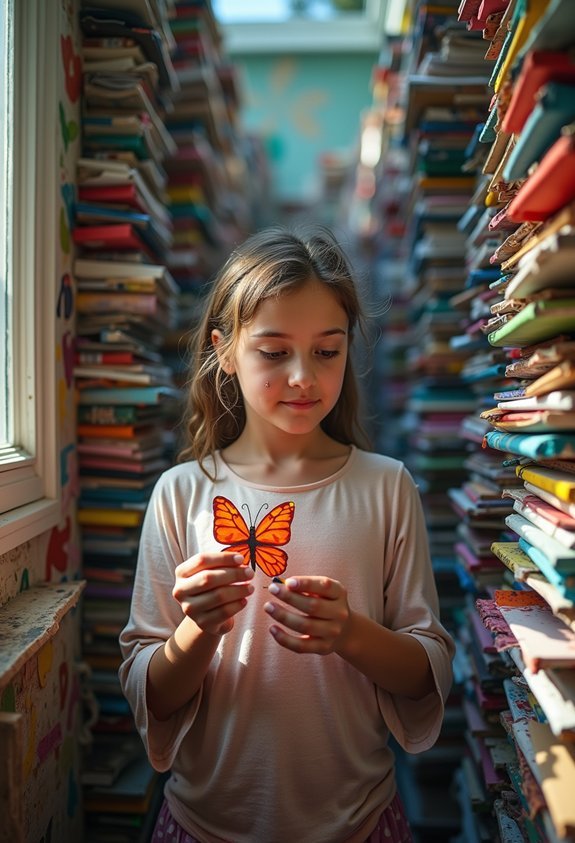
When I opened my hall closet and an avalanche of construction paper butterflies buried me alive, I knew things had gotten out of hand.
There I was—literally drowning in finger paintings, pipe cleaner sculptures, and approximately seven thousand “Best Mom Ever” cards (all from the same kid). My emotional attachment to every scribble was real, but so was the clutter control crisis happening in my home.
I’d been keeping everything. Every. Single. Thing.
The stick-figure family portraits? Check. The mystery blob that might be a dog—or possibly a spaceship? Saved it. That crumpled tissue paper “masterpiece” from 2019? You bet.
I finally realized I wasn’t honoring their creativity by hoarding it all.
I was just creating a very colorful fire hazard—and unknowingly forcing my brain to track dozens of additional mental tasks every time I walked past that closet.
Creating a Selection System That Actually Works
After staring at Mount Crayon for what felt like hours, I developed a system that changed everything—and it’s honestly so simple you’ll wonder why nobody told you about it sooner.
Here’s what I do: I only keep pieces that meet specific artwork criteria—things that show genuine creativity, mark a milestone, or make me laugh out loud.
I only save artwork that shows real creativity, marks a milestone, or makes me genuinely laugh out loud.
Not every finger painting makes the cut.
The sentimental value test helps too. I ask myself: “Will this matter in ten years?” If it’s just another rainbow (they’ve drawn forty-seven), it goes.
But that portrait where you’re apparently a purple blob with spaghetti hair? That’s a keeper.
This approach cut my pile by seventy percent, and honestly, I don’t miss what’s gone.
Naming emotions tied to each piece helped me separate my feelings from the actual object—suddenly, it wasn’t about rejecting my child’s efforts, but about choosing which memories deserved permanent space in our home.
Digital Solutions That Preserve Without the Paper Pile
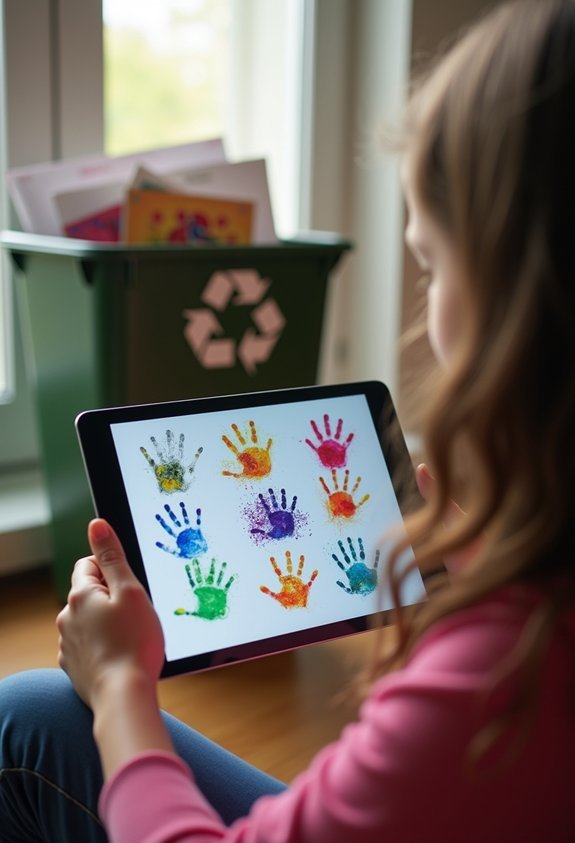
Once you’ve picked your favorites, you’ll still have a stack that makes your eye twitch—which is exactly where going digital becomes your new best friend.
Snap photos with your phone (natural lighting works wonders), then organize them using art apps designed specifically for memory preservation. Upload everything to cloud storage—because hard drives crash and phones get dropped in toilets.
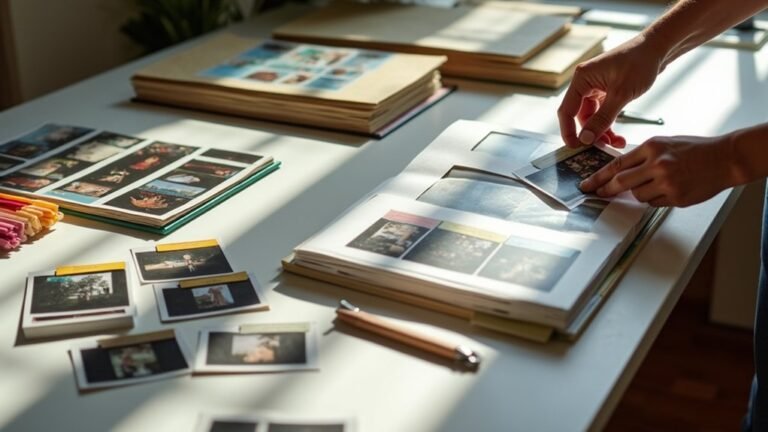
Here’s the game-changer: turn your digital archiving into annual photo books. Your kids actually flip through these, unlike that bin in the garage.
Some parents create virtual galleries their children can scroll through whenever nostalgia hits. It’s not the same as keeping every piece, sure—but it beats the avalanche of construction paper currently consuming your dining room table.
Digital wins. By clearing physical piles, you’re also reducing cognitive load that comes from visual clutter demanding constant attention from your brain.
What I Kept and Why Those Pieces Matter Most
The shoebox under my bed tells the real story—not the Pinterest-perfect one, but the actual why-I-can’t-let-this-go story.
Here’s what made the cut: my daughter’s first self-portrait (those giant circle hands!), the Father’s Day card with the backwards letters, and that random Tuesday drawing where she wrote “I love you” without being prompted.
These favorite pieces aren’t the most artistic—they’re the most *them*.
The sentimental value isn’t about perfection. It’s about catching a moment you can’t recreate, like when your kid still thought they were spelled “thay” or drew the family dog with six legs.
The magic is in the imperfect moments—the misspelled words and wonky proportions that capture exactly who they were right then.
I kept maybe fifteen pieces per kid, per year. That’s it.
Everything else? Photographed and released back into the wild (also known as the recycling bin).
Letting go of the rest revealed what truly matters—not a guilt-free trophy collection, but a focused reminder of the moments that shaped our family.
Teaching My Kids to Let Go (And What They Taught Me)
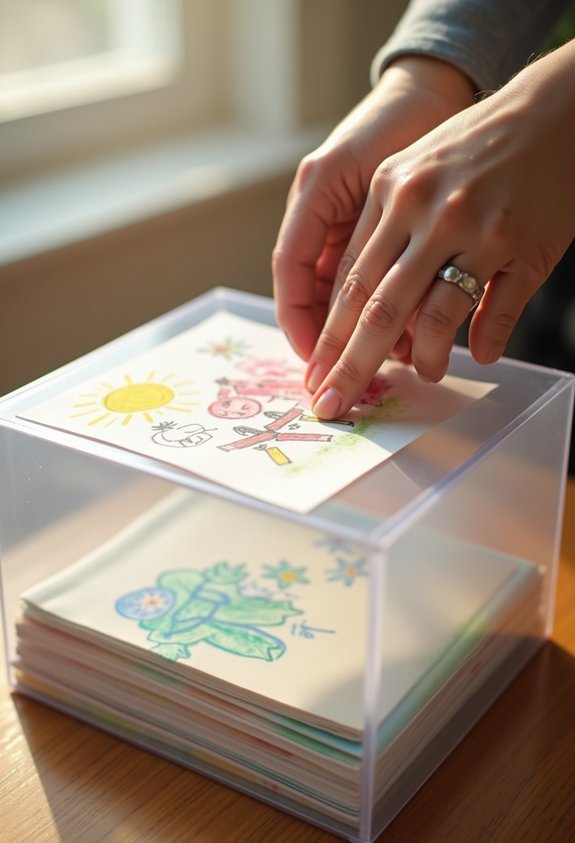
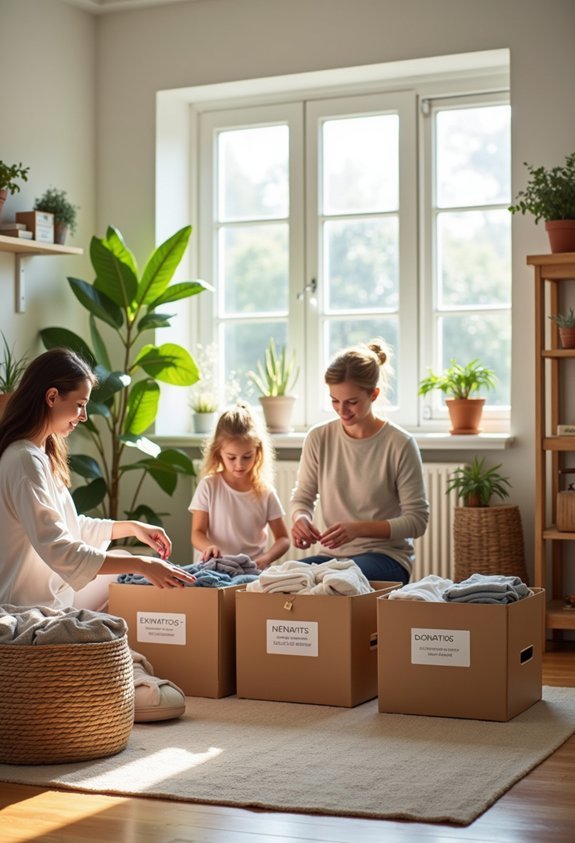
When I finally worked up the nerve to involve my kids in the great art purge, I expected tears—maybe even a full-blown meltdown over that crumpled tissue-paper collage from 2019.
Instead? My seven-year-old glanced at half her paintings and said, “Yeah, we can toss those.”
Wait, what?
Turns out, kids don’t have the same artistic attachment we do. They’re already onto their next creation, while we’re clutching kindergarten scribbles like they’re museum-worthy masterpieces.
My daughter taught me something crucial that afternoon—letting go doesn’t diminish the joy of creating. She’d already moved on emotionally, finding her emotional balance naturally.
I was the one holding on too tight.
I realized I’d been stuck in nostalgia bias, unable to see that these items no longer mattered to the person who actually made them.
Sometimes our kids are wiser than we give them credit for (shocking, I know). They create, they enjoy, they release.
You may also like:
Maybe we should try that.
In case you were wondering
How Do Grandparents React When You Discard Artwork They Gave Back to You?
You’ll likely face hurt grandparent emotions if they discover you’ve discarded artwork they returned. Navigate family expectations carefully by privately disposing of pieces, keeping select favorites, or explaining your decluttering decisions honestly and respectfully.
What About Artwork From Children Who Have Since Passed Away?
You’ll want to preserve artwork from children who’ve passed away, as it holds immeasurable sentimental value during your grieving process. Don’t feel pressured to declutter these precious pieces—they’re irreplaceable memories you should cherish indefinitely.
Should You Tell Your Children Before Throwing Away Their Old Artwork?
Picture your child’s face when they discover their treasured drawing gone. Yes, tell them first. Open communication strategies minimize emotional impact and teach respect. It’s their work—they deserve involvement in deciding its fate.
How Do You Handle Artwork That Contains Handprints or Footprints?
You’ll want to prioritize handprint preservation by photographing or scanning these special pieces before discarding them. Consider footprint alternatives like creating digital compilations or transferring images onto photo books, allowing you to declutter while keeping memories intact.
What if Your Child Asks to See Discarded Artwork Years Later?
You’ll experience future regrets if you’ve discarded everything, so keep select pieces in a portfolio. Take photos before letting go, creating nostalgic memories they can revisit digitally. You’re preserving sentiment without storing everything physically.
Conclusion
But now you’ve got a system that works, a way to honor their creativity without drowning in paper, and—most importantly—permission to let go.
Your home will thank you. Your kids will survive it.
And honestly? You might even enjoy the breathing room.