How to Declutter When You’re Grieving
Start by giving yourself permission to take it slow—grief makes even simple decisions feel impossible, and that’s completely normal. Begin with neutral spaces like linen closets rather than diving straight into personal belongings, which helps you build momentum without overwhelming emotions. Create three boxes labeled Keep, Maybe, and Donate so you’re not forcing permanent decisions when your brain’s still foggy from loss. Set tiny goals like sorting one drawer or spending just ten minutes, because some days that’s genuinely all you’ve got. And when it feels too heavy, ask a trusted friend who’ll respect your pace and won’t judge the tears that might show up unexpectedly—because decluttering while grieving isn’t about efficiency, it’s about honoring both what you’ve lost and what you need right now. There’s actually a gentle framework that makes this whole process feel less impossible.
Key Takeaways
- Take your time and practice self-compassion; grief makes decisions harder, so there’s no rush to complete everything immediately.
- Start with neutral, low-emotion spaces like linen closets to build momentum before tackling more personal, emotionally charged items.
- Use three labeled boxes—Keep, Maybe, and Donate—to organize items without immediate pressure to make final decisions.
- Set small, achievable goals like sorting one drawer or three items to maintain focus and create accomplishment during difficult times.
- Ask trusted friends for support when needed; choose helpers who respect your pace and understand the emotional weight of decluttering.
Give Yourself Permission to Take It Slow

When you’re dealing with grief, everything feels harder—even deciding what to do with that stack of mail on the counter.
So here’s your first rule: you don’t have to tackle it all today.
Or this week, honestly.
Self compassion practices aren’t just feel-good fluff—they’re survival tools when you’re mourning.
Self-compassion isn’t indulgent when you’re grieving—it’s how you survive the smallest tasks while your world falls apart.
Set emotional checkpoints throughout the decluttering process (maybe every fifteen minutes?) and ask yourself: am I doing okay right now?
If the answer’s no, stop. Walk away. Make tea. Pet your dog.
There’s no decluttering police coming to judge your pace.
Some days you’ll manage one drawer. Other days, you’ll stare at that drawer and decide Netflix sounds better—and that’s completely valid.
Progress isn’t linear when your heart’s broken.
Remember that your brain’s response to clutter is a coping mechanism, not a personal failure—especially when you’re navigating loss.
Start With Neutral Spaces That Feel Less Emotional
Once you’re ready to actually start sorting through stuff, here’s a strategy that’ll save you from emotional ambushes: begin with the boring rooms.
Your linen closet? Perfect neutral space organization territory. The junk drawer in your kitchen? Go for it.
These spaces carry way less emotional weight than, say, your loved one’s closet or the photo albums stacked in the basement. When you tackle a bathroom cabinet first, you’re practicing emotional attachment assessment without the devastating gut-punch of stumbling across their handwriting.
Think of it like warming up before a workout—you wouldn’t jump straight into the heavy stuff, right?
The pantry, garage shelves, or utility room let you build decluttering momentum without drowning in memories.
You’re getting the muscle memory down before the really hard parts.
Starting with these neutral zones also helps you create open space in storage that you’ll need later when you’re ready to thoughtfully sort items that carry deeper meaning.
Create a Memory Box System Before You Sort
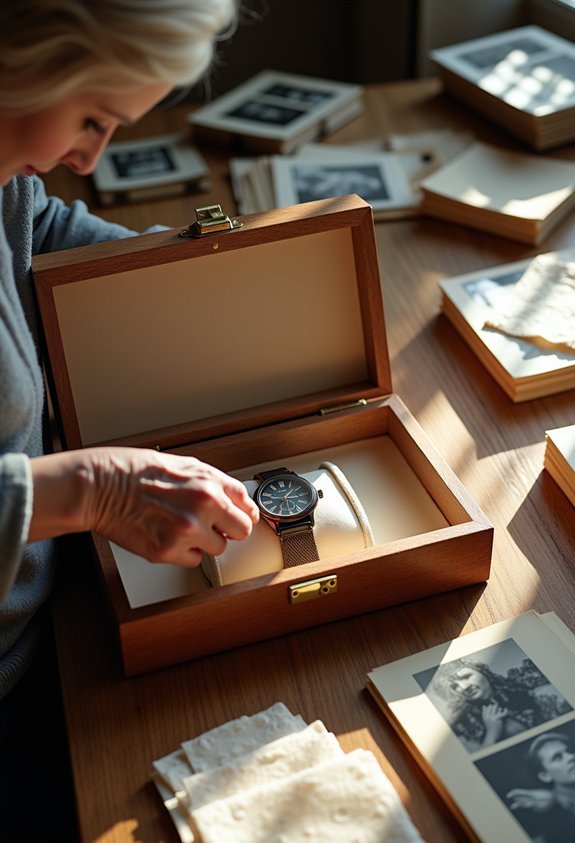
Before you touch a single item from their life, set up three clearly labeled boxes—and yeah, I know it sounds weirdly administrative for something this emotional, but trust me on this.
Label them: Keep, Maybe, and Donate.
The “Maybe” box is your safety net (because deciding between treasuring grandma’s entire ceramic cat collection versus keeping just one feels impossible right now).
Memory box ideas don’t have to be complicated—a sturdy container that fits under your bed works perfectly.
Sentimental item sorting becomes way less overwhelming when you’re not making permanent decisions immediately. You’re just… organizing possibilities.
Give yourself permission to move things between boxes twenty times. That’s literally the point.
You’re creating breathing room while your heart catches up with reality.
Practice self-forgiveness and kindness when emotions surface—grief makes every choice feel heavier than it needs to be.
Set Tiny, Energy-Appropriate Goals for Each Session
Your grief brain has approximately seventeen seconds of focus before it wanders to that thing they used to say, or how tired you are, or whether you remembered to feed the dog—so planning to “tackle the whole garage today” is setting yourself up to feel like crap.
Grief brain has seventeen seconds of focus—so planning to tackle the whole garage today is setting yourself up to feel like crap.
Instead, think stupidly small.
One drawer. Five minutes. Three items.
These mini milestones actually work because they’re—wait for it—achievable. When you complete manageable tasks (even tiny ones), your brain gets a little dopamine hit that says “hey, you’re not completely falling apart.”
Try this: set a timer for ten minutes and sort one shelf. That’s it. When the timer goes off, you’re done. Gold star. You showed up.
Tomorrow’s another shelf.
As you sort, focus on a single item at a time and ask yourself the three questions: What is it? When was it last used? What purpose does it serve? This simple framework helps cut through the emotional fog when grief makes every decision feel impossible.
Know When to Ask for Help and Who to Invite In

Sometimes those ten-minute sessions reveal something brutal: you can’t actually do this alone.
And that’s completely okay.
Your support networks exist for exactly this reason—grief makes everything harder, including deciding whether to keep your grandmother’s collection of ceramic owls (all forty-seven of them).
Invite trusted friends who understand your loss but won’t make every decision emotional. You need someone who’ll say, “Hey, let’s keep three owls and donate the rest” without judgment.
Avoid people who rush you or dismiss your feelings.
The right helper respects your pace, holds space for tears, and maybe—just maybe—makes you laugh when you discover that truly hideous sweater you forgot existed.
You may also like:





Consider engaging with others who’ve faced similar challenges—sharing experiences with those who understand inherited clutter can provide solidarity and practical strategies you might not have considered.
You’re not weak for needing help.
You’re human.
In case you were wondering
Should I Keep Items That Remind Me of the Person I Lost?
Yes, keep items with sentimental attachment that bring comfort. Don’t rush decluttering decisions while grieving. Wait until you’ve reached emotional readiness to sort through belongings, as you’ll make clearer choices when you’re emotionally prepared.
How Long After a Loss Is It Normal to Feel Unmotivated?
The fog of grief doesn’t follow a timeline. You’ll experience emotional exhaustion for months or even years—there’s no “normal” grief duration. Don’t pressure yourself to feel motivated before you’re ready.
What if Family Members Want Different Items Than I Do?
Have honest conversations early about who wants what. Set clear emotional boundaries and consider using a mediator if family dynamics become tense. You’re allowed to prioritize your needs while respecting others’ grief too.
Is It Okay to Donate or Sell Belongings From the Deceased?
Yes, it’s perfectly acceptable once you’ve honored sentimental value and family wishes. Donation ethics suggest waiting until you’re emotionally ready and ensuring legally entitled relatives have chosen meaningful items first. You’re helping others while healing.
Can Grief Make Decluttering Physically Exhausting Even With Small Tasks?
Yes, grief causes both emotional fatigue and physical exhaustion that make even small decluttering tasks feel overwhelming. You’re experiencing a normal response to loss, so you’ll need extra rest and shouldn’t push yourself too hard.
Conclusion
You’re doing something really hard—decluttering while your heart’s still healing. That takes courage, even if it doesn’t feel like it right now. Remember, there’s no cosmic deadline here (this isn’t some reality TV show where you’ve got 48 hours to transform your life). You’re allowed to move slowly, cry when you need to, and keep what matters. Be gentle with yourself. You’ve got this.