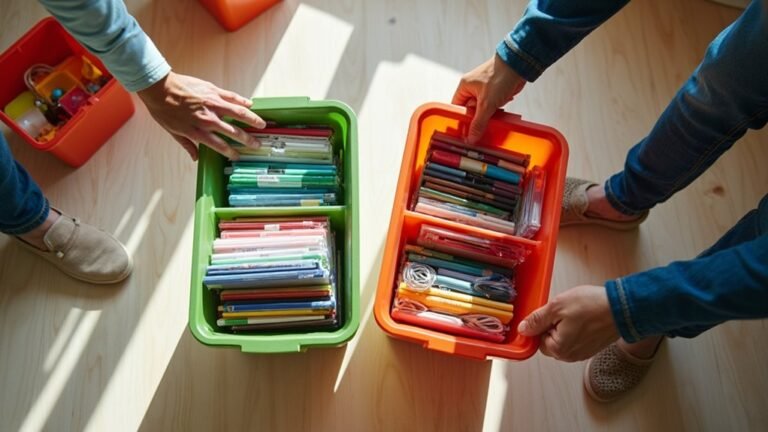
How to Declutter When You Live With a Pack Rat
Living with a pack rat doesn’t mean you’re doomed to drown in their stuff—you just need a game plan that respects both your sanity and their attachment issues. Start by claiming shared spaces like the kitchen and living room as clutter-free zones while letting them keep their personal areas however they want. Begin decluttering together in low-stakes spots (think junk drawers, not sentimental photo boxes) to build momentum without triggering emotional meltdowns. Create simple decision-making rules you both agree on, then celebrate small wins instead of obsessing over perfection—because the goal here is progress that sticks, not a pristine home that breeds resentment. There’s actually a whole approach to making this work long-term without either of you losing your minds.
Key Takeaways
- Designate shared spaces as clutter-free zones while allowing personal areas for belongings to respect boundaries.
- Start decluttering in low-stakes areas like junk drawers to build confidence without triggering emotional resistance.
- Create a written decision-making system with clear criteria to evaluate which items to keep or discard.
- Schedule monthly check-ins to review progress, celebrate wins, and address challenges with empathy and support.
- Focus on maintaining a peaceful home environment rather than achieving perfection to reduce resentment.
Understand the Psychology Behind the Clutter

Before you can tackle the mountains of stuff in your pack rat’s life, you’ve got to understand what’s going on in their head—and trust me, it’s way more complicated than just being lazy or messy.
Pack rats often have deep emotional attachment to their belongings. That broken lamp? It reminds them of their grandmother. Those magazines from 2015? They *might* need that recipe someday.
Every item tells a story, holds a memory, or represents a possibility that feels too precious to let go.
Here’s the thing—clutter triggers are everywhere, and they’re different for everyone.
Maybe your partner keeps clothes that don’t fit because throwing them away feels like admitting defeat.
Or they hoard free samples because wasting anything (even that tiny shampoo bottle) creates genuine anxiety.
Understanding these patterns helps you approach decluttering with empathy instead of frustration.
Remember, struggling to let go is not a character flaw—it’s actually a brain safety mechanism designed to protect us from perceived threats.
And honestly? That makes all the difference.
Establish Shared Zones and Personal Boundaries
When you’re living with a pack rat, trying to share space can feel like navigating a minefield of “important” stuff—and honestly, you need to set some ground rules before the clutter takes over your entire home.
Start by having a calm conversation about which areas are shared spaces (living room, kitchen, bathroom) and which are personal zones. The shared spaces need to stay functional for everyone—not just your pack rat.
Make it clear: your bedroom stays clutter-free, period.
Their space? They can keep it however they want (within reason). This compromise respects personal preferences while protecting your sanity.
Think of it like roommate rules, except you’re probably not charging rent.
Set specific boundaries—like “kitchen counters must be clear for cooking” or “hallways can’t become storage units.”
Document these space allocations in writing so both of you can reference them when disagreements arise, and revisit the agreement monthly to address any issues before they become major conflicts.
Start Small With Low-Stakes Areas
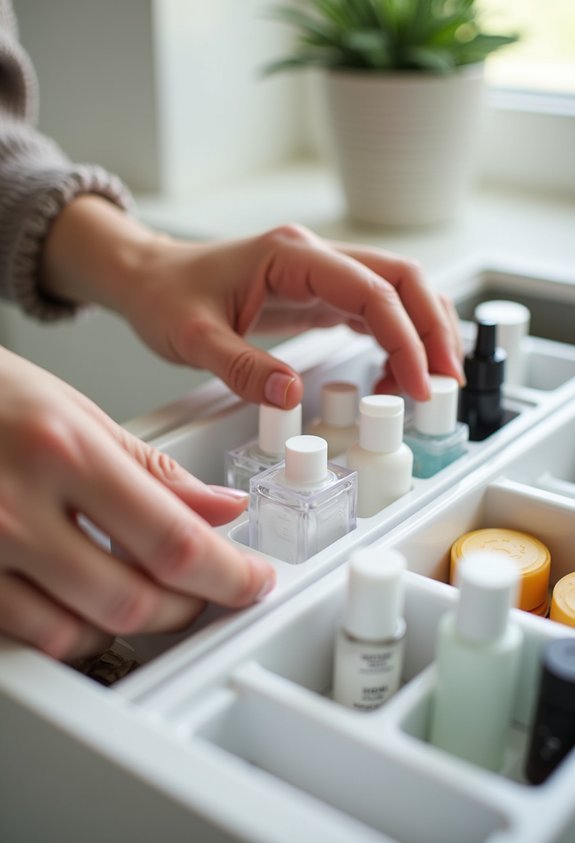
Now that you’ve drawn your battle lines, you’ll want to tackle the actual decluttering—but here’s the thing: don’t start with your pack rat’s overflowing closet or that garage that looks like it survived an explosion at a thrift store.
Begin with low pressure spaces instead.
Think junk drawers, bathroom counters, or that one kitchen shelf crammed with expired spices from 2014. These areas won’t trigger emotional meltdowns because—let’s be honest—nobody’s forming deep attachments to crusty hand lotion samples.
Starting small builds gradual progress without drama. You’re creating tiny victories that prove decluttering won’t destroy your household peace (or your relationship).
Plus, when your pack rat sees that clearing the medicine cabinet didn’t require a full-scale intervention, they might actually relax.
Starting with low-value items gives you quick wins and reduces decision fatigue, making the process feel less overwhelming for everyone involved.
Baby steps, friend. Baby steps.
Create a Decision-Making System Together
Your pack rat needs clear rules—not because they’re incapable of making choices, but because decision paralysis is real when you’re staring at seventeen coffee mugs wondering if someday, somehow, you’ll need the chipped one with the faded logo from a company that went bankrupt in 2009.
Develop decision criteria together. Ask: Have we used this in the last year? Does it work? Would we honestly replace it if it disappeared tomorrow?
These questions cut through the “but what if” spiral.
Try priority ranking too—rate items from one to five based on usefulness and emotional value.
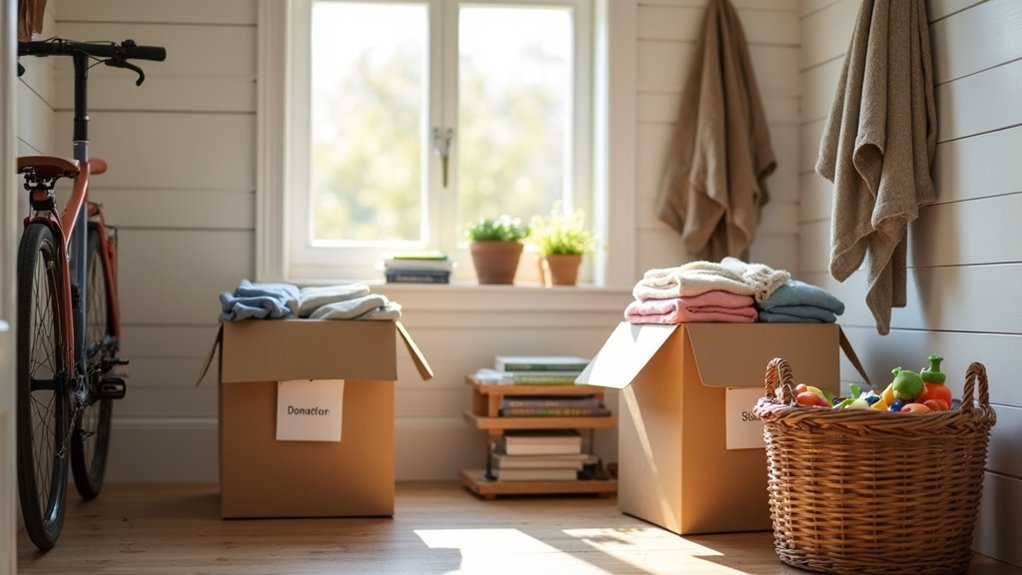
Anything scoring below a three goes in the donation pile (unless your pack rat needs negotiation room, which is totally fair).
Translate your shared boundaries into if-then statements that make future decisions automatic—like “If we haven’t used it in a year, we donate it” or “If it’s broken and unfixable, it goes.”
Write your system down. Make it visible. Reference it when debates heat up.
Maintain Progress Without Resentment

After you’ve worked through bags of donations and survived the Great Mug Debate of 2024, the real challenge begins—keeping things decluttered without turning into the Clutter Police.
You may also like:


You’ll need communication strategies that don’t sound like nagging (even though you’re technically right). Here’s how to maintain progress:
- Schedule monthly “check-ins” instead of constantly pointing out their new pile of magazines
- Celebrate wins together—they donated three boxes last month, so acknowledge it
- Offer emotional support when they struggle to let go, not eye-rolls
- Keep your spaces separate so you’re not monitoring their desk drawer daily
- Remember why you’re doing this—a peaceful home, not a perfect one
Small, repeatable habits help maintain calm after initial decluttering efforts, so focus on establishing routines that work for both of you.
Progress isn’t linear, and that’s okay.
In case you were wondering
What if My Partner Refuses to Acknowledge They Have a Hoarding Problem?
Try communication strategies like “I” statements to express your concerns without blame. Practice empathy exercises by understanding their emotional attachment to items. If they’re still resistant, suggest couples counseling to address the underlying issues together.
How Do I Declutter Shared Items We Both Claim Ownership Of?
You’ll find shared ownership items need compromise-based decluttering strategies. Coincidentally, the belongings causing most conflict often matter least to both of you. Create a “maybe” category, then revisit together monthly to decide what truly deserves keeping.
Can Professional Organizers Help When One Person Doesn’t Want to Participate?
Yes, professional intervention can help even with a reluctant partner. Organizers offer neutral perspectives and proven organizing strategies that reduce conflict. They’ll work with you individually while respecting your partner’s boundaries and comfort level throughout the process.
What Legal Rights Do I Have to Remove Items From Shared Spaces?
Navigating clutter’s murky waters requires understanding that you can’t legally remove items from shared spaces without consent, regardless of legal ownership. If you’re married, both spouses typically have equal rights to possessions and decisions about communal areas.
How Do I Protect My Belongings From Being Absorbed Into Their Clutter?
You’ll need clear storage solutions and boundaries to keep your items separate. Start labeling items with your name, use designated containers, and store your belongings in spaces your roommate can’t access easily.
Conclusion
Living with a pack rat isn’t easy—but you’ve got this. Take Sarah, who finally got her husband to agree on a “one in, one out” rule for his baseball cap collection (he had forty-three). Small wins matter. Remember, you’re not trying to change them overnight, just creating a home where you both feel comfortable. Progress beats perfection every single time, and you’re already halfway there by seeking solutions together.