How I Declutter My Kitchen Counters Every Week
Start with a ten-minute Sunday reset—set a timer and return everything to its designated spot, whether that’s mail, coffee mugs, or random kitchen gadgets that somehow multiply overnight. Then keep it manageable with a quick two-minute counter sweep after dinner each night, wiping down surfaces and tossing stray items into a basket. Limit visible appliances to just three essentials (coffee maker, we’re looking at you), store the rest in cabinets, and create specific homes for clutter magnets like keys and chargers. The secret isn’t perfection—it’s having a stupidly simple system that actually fits into your real life, and there’s more to making it stick.
Key Takeaways
- Set a ten-minute timer every Sunday to clear counters by returning items to designated spots without deep-cleaning.
- Perform a two-minute nightly counter sweep after dinner to remove misplaced items and wipe surfaces quickly.
- Limit visible appliances to three daily essentials and store others in cabinets to reduce visual clutter.
- Designate specific homes for frequently cluttering items like mail, keys, and chargers using organizing zones.
- Use a three-tier mail tray to sort papers immediately: action needed, filing, and recycling.
The 10-Minute Sunday Reset That Changed Everything
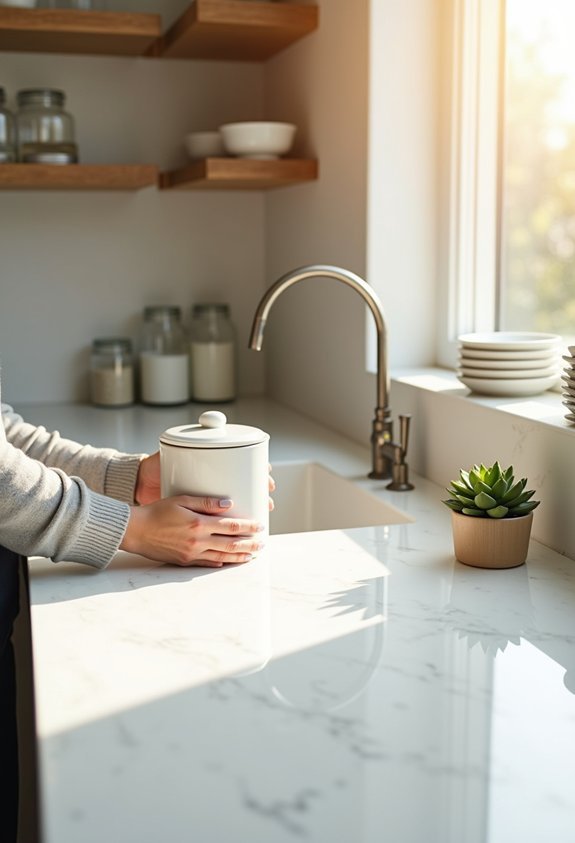
When I started doing this one tiny thing every Sunday evening, my kitchen went from disaster zone to actually manageable—and I’m not exaggerating.
One small Sunday habit transformed my kitchen from complete chaos to something I can actually manage without losing my mind.
Here’s what I do: I set a timer for exactly ten minutes (no more, no less) and clear every single counter. Everything goes back where it belongs—mail gets sorted, random coffee mugs return to cabinets, that pile of “I’ll deal with it later” actually gets dealt with.
The secret?
It’s about time management, not perfection. You’re not deep-cleaning or reorganizing your entire kitchen organization system. You’re just hitting reset before Monday chaos strikes again.
And honestly? Those ten minutes on Sunday save me at least thirty minutes of frustrated searching and stress during the week. Best trade-off ever.
I make sure to keep only a few essential tools visible on my counters—everything else gets put away in its designated home.
Designating Homes for Common Counter Clutter
That ten-minute reset works like magic—but here’s the thing I learned the hard way: if your stuff doesn’t have a designated spot, you’ll just keep resetting the same clutter every single week (ask me how I know).
So I started designating spaces for everything that constantly landed on my counters. Mail goes in a basket by the door—not on the counter. Keys get a hook. Phone chargers? A specific drawer.
Here’s what helped most: creating organizing zones based on what actually happens in my kitchen. Coffee station stuff stays together, breakfast items in one cabinet, and snack things where the kids can reach them.
I also started using drawer dividers to keep utensils and small kitchen tools from migrating back onto the counter.
The goal isn’t perfection—it’s making it stupidly easy to put things away so your reset actually sticks.
My Daily 2-Minute Maintenance Habit

Every night after dinner, I spend exactly two minutes doing what I call the “counter sweep”—and honestly, it’s the only reason my kitchen doesn’t look like a disaster zone by Thursday.
Here’s what I do: I grab anything that doesn’t belong (mail, phone chargers, random toys) and toss it in a basket. Quick clean ups like this prevent the avalanche effect—you know, when one water bottle multiplies into seventeen items overnight.
I wipe down surfaces with whatever’s handy.
That’s it.
The trick is making this part of your daily routines, like brushing your teeth. It’s not about perfection—it’s about keeping chaos from taking over.
Two minutes feels doable, even on exhausting days when you’d rather collapse on the couch. This simple habit reduces cognitive load by clearing visual noise, which research shows is linked to increased cortisol and stress.
Appliances I Keep Out vs. Appliances I Store Away
Once you’ve got your counters clear, you’ll quickly realize the biggest culprits taking up space are probably your appliances—and here’s the uncomfortable truth: most of us keep way too many out.
I only keep three essential appliances visible: my coffee maker (because mornings are hard enough), my knife block, and one wooden cutting board that doubles as aesthetic considerations.
Everything else? Stored away.
Your stand mixer, air fryer, toaster—they can all live in cabinets until you actually need them. I know it feels inconvenient at first, but here’s what changed my mind: I use my toaster maybe twice a week, yet it was hogging prime real estate every single day.
Now my counters look intentional instead of chaotic, and honestly? Pulling out appliances when I need them takes like ten seconds.
The key is asking whether each appliance actually supports your current daily routines or if you’re just keeping it out of habit.
Total game-changer.
Creating a Mail and Paper Command Center
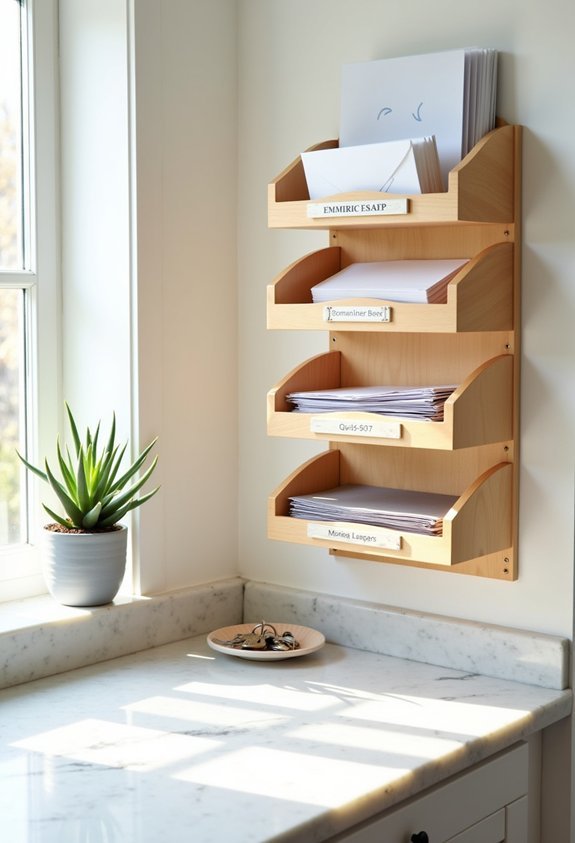
If you’re anything like me, that random pile of mail on your kitchen counter has become part of the furniture—except furniture doesn’t multiply daily and make you feel guilty every time you walk past it.
Here’s what finally worked for me: designate one spot—and I mean one—for all incoming paper.
I use a simple three-tier tray (nothing fancy) for my mail organization system.
Top slot: needs immediate attention.
Middle: to file or scan later.
Bottom: recycling that hasn’t made it to the bin yet.
The secret to paper sorting? Touch each piece exactly once. Open it, decide its fate, put it in the right slot.
This approach creates an if-then statement that makes the decision automatic: if mail arrives, then it goes directly into one of these three slots based on what action it needs.
No more scattered piles. No more countertop avalanches.
Just one contained spot that actually gets cleared weekly.
The One-In-One-Out Rule for Kitchen Items
That fancy garlic press you bought three years ago—the one buried behind your other gadgets—has probably seen less action than your gym membership, and yet somehow your kitchen drawers keep getting fuller.
Here’s the fix: every time you bring a new kitchen item home, one old item has to go. It’s that simple.
Bought a new spatula? Donate the warped one you’ve been meaning to replace forever (you know the one).
This one-in-one-out approach keeps your kitchen organization in check without requiring a complete overhaul every few months.
You’re not being wasteful—you’re being realistic about what you actually use.
And honestly? Minimizing clutter means you’ll actually find that measuring cup when you need it, instead of excavating through three drawers like you’re on an archaeological dig.
The shift from “Where can I store this?” to “What will this replace?” transforms how you think about every new kitchen tool that catches your eye.
What to Do When Life Gets Busy and Counters Get Messy

Even when you’ve got the best kitchen systems in place, life has this annoying habit of throwing curveballs—sick kids, work deadlines, that unexpected plumbing disaster—and suddenly your pristine counters look like a before photo on a home makeover show.
Don’t panic.
Set a timer for ten minutes (yes, just ten) and tackle the worst spots first. This isn’t about perfection—it’s about stress reduction and getting your space functional again.
Here’s your emergency reset: trash goes in the bin, dishes hit the dishwasher, everything else gets tossed into one designated “deal with later” basket.
You may also like:




Time management tip? Schedule a proper declutter session when life calms down.
For now, you’re doing great just keeping things moving forward.
Before you dive in, take a few deep breaths to calm your nervous system so you can think more clearly about what actually needs your attention right now.
In case you were wondering
How Do You Get Family Members to Help Maintain Clear Counters?
You’ll need to establish clear expectations through family meetings where everyone discusses counter rules. Create a chore chart assigning specific tasks to each person, making them accountable for keeping their designated areas clutter-free daily.
What Storage Solutions Work Best for Small Kitchens With Limited Cabinet Space?
You’ll maximize space by installing vertical storage like wall-mounted shelves and magnetic strips. Consider multi-functional furniture such as kitchen carts with built-in shelving or fold-down tables that offer hidden compartments for storing essentials efficiently.
How Do You Keep Decorative Items on Counters Without Creating Clutter?
Studies show kitchens with three or fewer decorative pieces feel 40% less cluttered. You’ll maintain decorative balance by grouping items in odd numbers while ensuring functional aesthetics through dual-purpose pieces like attractive canisters or stylish utensil holders.
What Do You Do With Seasonal Kitchen Items You Only Use Occasionally?
Store them in labeled bins for seasonal storage in your pantry or garage. Create a kitchen rotation system where you’ll swap items quarterly, keeping only what’s currently relevant on your counters and accessible shelves.
How Often Should You Deep Clean Counters Beyond Daily Decluttering?
You’ll want to deep clean your counters weekly, beyond daily decluttering. Use appropriate cleaning products to sanitize and remove buildup. This deep cleaning frequency ensures you’re eliminating bacteria and maintaining a truly hygienic kitchen surface.
Conclusion
Look, you’re not gonna achieve picture-perfect counters every single day—and that’s totally fine. Some weeks you’ll crush it, and other weeks your kitchen’ll look like a tornado hit (we’ve all been there). The goal isn’t Instagram-worthy perfection; it’s creating a system that actually works for your real life. Give yourself grace, do what you can, and remember: even clearing one square foot counts as a win.