How to Meal Plan When You Hate Meal Planning
You don’t need complicated meal plans—you need a flexible framework that works with your actual life. Instead of mapping out every recipe, create simple theme nights (like Taco Tuesday) where you stick to a category, not a rigid menu. Stock your pantry like a restaurant with versatile ingredients that work across multiple dishes, and cook in components you can mix and match throughout the week. When exhaustion hits, rely on freezer shortcuts and pantry staples that beat takeout without the guilt—and there’s a whole strategy to make this effortless.
Key Takeaways
- Replace rigid meal plans with flexible frameworks using simple templates like protein plus vegetables to reduce stress.
- Assign theme nights to weekdays for easier decisions without committing to specific recipes each time.
- Stock versatile pantry staples and frozen proteins that work across multiple dishes to minimize shopping trips.
- Cook in modular components that mix and match throughout the week instead of complete single-use recipes.
- Keep frozen shortcuts and pantry backup meals ready for exhausting days when cooking feels impossible.
Why Traditional Meal Planning Fails for Most People

Look, if you’ve ever bought a meal planning book or downloaded a fancy app only to abandon it three days later, you’re not alone—and you’re definitely not failing at adulting.
Traditional meal planning fails because it demands perfection in a world that’s wonderfully messy.
Life is beautifully chaotic, and your meal planning should embrace that reality instead of fighting against it.
Those Pinterest-perfect plans ignore your actual life—the spontaneous dinner invites, the days you’re too exhausted to chop vegetables, the random Tuesday when pizza just *has* to happen.
The biggest meal planning pitfalls? They require too much upfront work and zero flexibility.
Plus, let’s be honest: time management struggles are real when you’re supposed to plan fourteen meals while also, you know, living your life.
Just like tracking every transaction for a month reveals where your money actually goes, tracking what you *actually* eat (not what you think you should) shows your real eating patterns.
The system isn’t broken because of you.
You need something different entirely.
Build a Minimal Meal Framework Instead of Rigid Plans
Instead of mapping out every single meal like you’re planning a military operation, you need a framework—think of it as meal planning’s cool, laid-back cousin who doesn’t stress about the details.
Here’s the thing: a flexible framework isn’t about knowing you’ll eat chicken teriyaki on Tuesday at 6:47 PM. It’s about deciding you’ll make some kind of protein with vegetables twice this week (whenever hunger strikes).
This is where minimalist meals become your best friend.
Pick three simple formulas you actually enjoy—maybe it’s grain + protein + veggie, or pasta + sauce + add-ins, or even breakfast-for-dinner.
When you’ve got these basic templates ready, you’re not scrambling at dinnertime wondering what humans typically eat.
You’re working smarter, not harder.
And honestly? That’s the whole point.
Limiting your meal options to just three rotating formulas reduces decision fatigue and the mental energy drain that comes with figuring out what to cook every single night.
The “Theme Night” Strategy for Decision-Fatigued Planners
When your brain feels like it’s been through a blender by 5 PM, deciding what’s for dinner can feel like solving a calculus problem—nobody signed up for that kind of stress after a long day.
Enter theme nights—your new best friend.
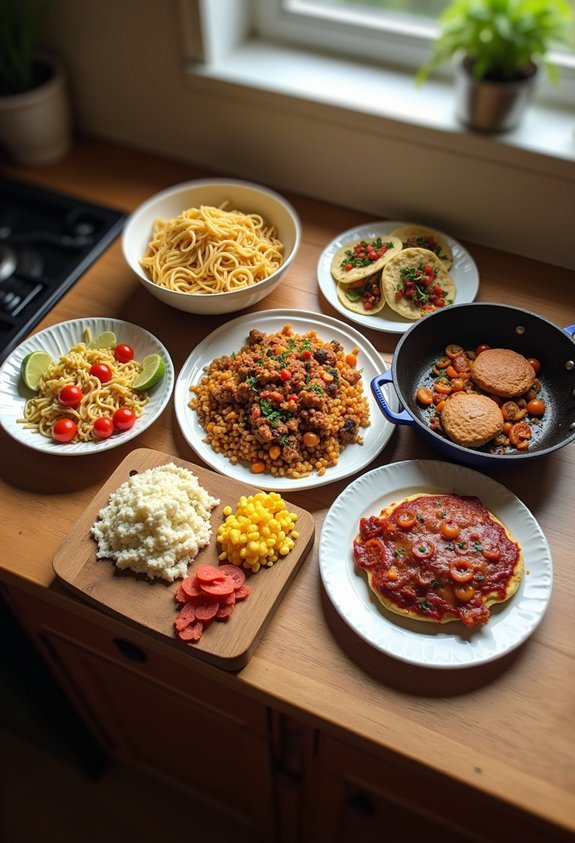
Assign each weeknight a food category: Taco Tuesday, pasta night, stir-fry Friday. You’re not locking yourself into specific recipes (that’s just another rigid plan), but you’re giving yourself guardrails that make decisions laughably easier.
The magic happens with theme variations and recipe rotation. Tacos can mean beef tacos one week, fish tacos the next, or even taco salads when you’re feeling fancy.
Same concept, different execution—it keeps things interesting without requiring a PhD in meal planning.
Your brain gets a break, your family knows what’s coming, and dinner actually happens.
Research shows that multitasking increases stress and slows productivity, which is exactly what happens when you’re trying to decide between seventeen different dinner options while also mentally reviewing tomorrow’s meetings.
Win-win-win.
Stock Your Kitchen Like a Restaurant (Not a Home Cook)
Theme nights solve the “what to cook” problem, but here’s where most people hit a wall—they open the fridge, realize they’re missing three key ingredients, and suddenly DoorDash is looking mighty tempting.
Here’s the secret: restaurants don’t shop for individual recipes. They stock restaurant essentials that work across multiple dishes.
You need pantry staples that multitask. Think canned tomatoes (pasta, soup, shakshuka), soy sauce (stir-fries, marinades, fried rice), and garlic that survives in your fridge for weeks.
Stock proteins you can freeze, grains that last forever, and those boring-but-brilliant vegetables like onions and carrots.
When your kitchen runs like a restaurant—ingredients that overlap across your theme nights—you’re never three missing items away from ordering takeout.
Build your shopping lists around simple ingredients and seasonal produce to keep costs down while maintaining variety across your weekly rotation.
That’s the difference between meal planning that works and meal planning that dies by Wednesday.
Embrace Modular Cooking: Mix, Match, and Repeat
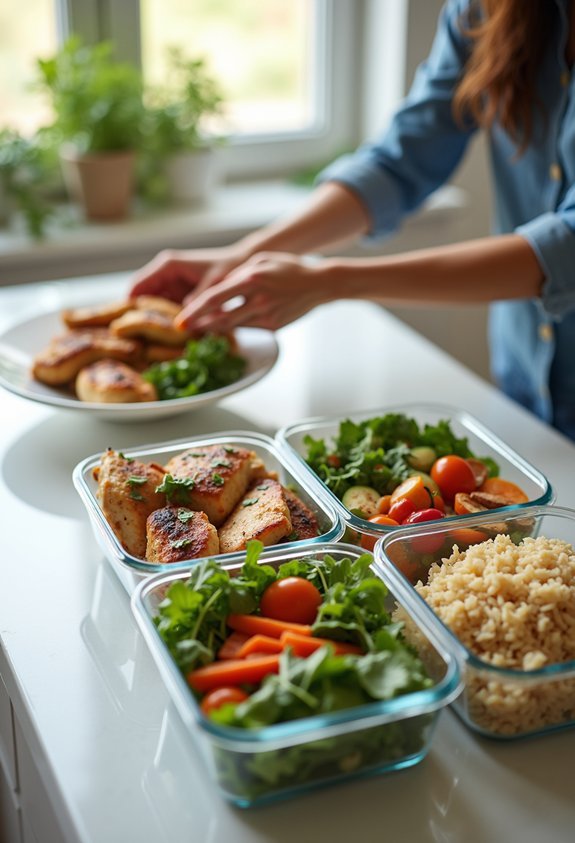
You’re still thinking in complete recipes, and that’s the trap. Instead, cook in components—versatile bases and proteins you can mix throughout the week.
Make a big batch of rice, roast a sheet pan of vegetables, and cook some chicken. Done.
Now you’ve got ingredient combinations that work a million ways.
Monday: chicken and rice bowls with roasted veggies.
Wednesday: fried rice using those same components.
Friday: chicken tacos (because who says rice has to be involved every time?).
This is how restaurants operate—they prep components, not individual dishes. It’s faster, it’s flexible, and it means you’re not eating the exact same meal four days straight (which, let’s be honest, makes you want to order takeout by day two).
Low-Effort Backup Plans That Beat Takeout Every Time
Even with your best meal-planning intentions, some nights just hit different—you’re exhausted, the kitchen feels like enemy territory, and that pizza delivery number is basically calling your name.
Here’s the thing: you need a backup plan that’s faster than scrolling through DoorDash.
Stock your freezer with grocery shortcuts like pre-cooked rice, frozen meatballs, and quality marinara—because three ingredients tossed together still counts as cooking.
Keep pantry staples for quick recipes: pasta that boils in seven minutes, canned beans for instant tacos, eggs for when-all-else-fails scrambles.
These aren’t fancy meals, and that’s exactly the point.
You may also like:





They’re your safety net—the difference between a fifteen-dollar pizza and a five-dollar dinner that still fills everyone up.
Prioritizing long-term financial security over impulse purchases means even these simple meals add up to real savings on your balance sheet.
In case you were wondering
How Do I Meal Plan When Family Members Have Different Dietary Restrictions?
Choose flexible meal options with customizable components, like taco bars or pasta stations, where everyone builds their own plate. Focus on family friendly recipes that easily adapt by swapping proteins, omitting allergens, or offering side alternatives.
What’s the Best Way to Use Leftovers Without Eating Them Repeatedly?
Transform yesterday’s proteins into today’s new dishes—think chicken to tacos, not reheated chicken. You’ll love creative leftover ideas and leftover ingredient swaps that disguise components completely, making meals feel fresh instead of repetitive.
How Far in Advance Should I Grocery Shop for Meals?
Shop 2-3 days ahead for optimal freshness and flexibility. This grocery shopping timeline prevents food waste while keeping your meal prep frequency manageable. You’ll avoid overwhelming yourself with too much planning while ensuring you’ve got fresh ingredients available.
Can I Meal Plan Successfully if I Travel Frequently for Work?
Yes, you can succeed with flexible planning. Focus on travel meal prep for work trips, stock quick meal solutions for between journeys, and embrace simplicity over perfection. You’ll adapt your rhythm as you go.
How Do I Handle Unexpected Dinner Invitations Without Wasting Prepped Food?
Freeze your prepped meal immediately or shift it to tomorrow’s dinner, making last minute adjustments to your plan. Build flexible meals using ingredients that won’t spoil quickly, so you’ll waste less when plans change unexpectedly.
Conclusion
Look—you don’t need Pinterest-perfect meal plans to feed yourself well. You just need a system that actually fits your real life, not some fantasy version where you suddenly love chopping vegetables for two hours.
Start small, pick one strategy from this guide, and give yourself permission to keep it simple. Your kitchen isn’t a restaurant you’re running—it’s supposed to make your life easier, not become another thing you’re failing at.